Skip to content
Premium Quality

Exterior Wall Niches

Add beauty and depth to any space in your home
25+ years
expirience
5000+
projects
Custom
designs

Who Is This Solution For

From structural post to architectural statement. EPS architectural shapes that look like stone — without the weight, cost, or structural engineering. Built to spec, installed in hours.

×
System Architecture
EPS Core + Polyurea Shell vs. Conventional Materials SYSTEM ARCHITECTURE Integrated Multi-Layer System

Our company's architectural products are engineered as a fully integrated system composed of:

  • EPS Core - 1.0-2.0 lb/ft³ density
  • Polyurea Coating - two-component, 30-60 mils
  • Adhesion Primer
  • UV-Stable Finish Coat

This is not a sequence of separate layers. It is a closed engineered envelope where every component has a defined structural or protective role.

Functional Role of Each Layer EPS Core
  • Provides geometric form
  • Maintains dimensional stability
  • Reduces total weight
Polyurea Shell
  • Adds mechanical resistance
  • Provides chemical inertness
  • Blocks moisture intrusion
Primer Layer
  • Ensures bond integrity between materials
Finish Coat
  • Protects against UV exposure
  • Stabilizes final appearance
Why Conventional Materials Fall Short

WOOD

  • Vulnerable to moisture and decay
  • Requires constant maintenance
  • Can structurally degrade in 3-7 years in harsh climates
FIBERGLASS
  • Dependent on rigid molds
  • Limited to prefabricated shapes
  • Custom designs become expensive
PVC
  • Thermal expansion: 5-8 × 10⁻⁵/°C
  • Can warp, open joints, and lose dimensional accuracy under temperature swings
PRECAST CONCRETE / NATURAL STONE
  • Extremely heavy
  • Requires cranes and reinforced substrates
  • Slower, more complex installation process
Performance Advantages of Our Company
  • CNC PRECISION: ±3 mm across any profile
  • WEIGHT REDUCTION: 60-80% lighter than reinforced concrete
  • FASTER INSTALLATION: no heavy lifting equipment required
  • LOWER STRUCTURAL LOAD: reduced dead load on building envelope
  • WIND RESISTANCE: 120-180 PSF
  • CODE ENGINEERING: designed to Florida Building Code requirements
  • PERMIT READY: substrate-specific anchorage by licensed engineer
Final Result

Our company is not a decorative surface treatment.

It is a fully documented, engineered, permit-ready architectural system designed to move efficiently from fabrication to installation without rework.


Download PDF
Material Composition
Engineering Advantages of EPS/Polyurea Over Wood, PVC, and Fiberglass Engineered Composite System

Our company’s products are built on a composite material architecture that no single conventional material can replicate.

Core Structure
  • EPS TYPE I - 1.0 lb/ft³ density
  • EPS TYPE II - 2.0 lb/ft³ density
  • Classified under ASTM C578
  • Closed-cell EPS foam
  • Water absorption: BELOW 2% per ASTM C272
Why It Matters

This low absorption threshold is critical for facade elements exposed to:

  • Wind-driven rain
  • Condensation cycles
  • Sustained humidity
Protective Outer Shell

Far exceeds conventional paints and gelcoats in durability and service resistance.

Polyurea Coating
  • 30-60 mil thickness applied
  • 70-85 Shore D hardness
  • High impact resistance
  • High abrasion resistance
  • Chemical inertness
Technical Comparison with Competing Materials WOOD
  • Hygroscopic by molecular structure
  • Shrinks, warps, and separates under wet/dry cycles
  • Vulnerable to fungi and insects
  • Structural degradation in 3-10 years in warm humid climates
ENGINEERED LUMBER
  • Reduces variability
  • Still moisture-sensitive
  • Still biologically vulnerable
PVC
  • Elastic modulus loses stiffness above elevated temperatures
  • Creeps under self-weight and wind pressure
  • UV causes embrittlement and pigment breakdown in 10-15 years
FIBERGLASS
  • Often lacks third-party certified data in custom fabrication
  • Gelcoat damage allows hidden water intrusion
  • Internal delamination may remain invisible until failure
Failure Modes Eliminated by Our Company

Our company EPS + Polyurea removes all common substrate failures:

  • No cellulosic substrate to rot
  • No metal component to corrode
  • No thermoplastic matrix to creep
  • No laminate interface to delaminate
Long-Term Client Value Projected Service Life:

15-25+ years

Maintenance Interval:

10-15 years

Topcoat refinishing only.

Delivered Performance

ASTM-traceable performance data.

Based on documented standards, not marketing claims.

Final Statement

Our company is a measurable, testable, engineered exterior product system designed for long-term architectural performance.


Download PDF
Visual Presence
Architectural Expression as an Engineering Parameter

The visual authority of an architectural product is not a subjective attribute - it is a direct function of measurable geometric precision.

Profile relief depth of 25-150 mm generates shadow lines that establish legible architectural form at distances of 20-50 meters.

Symmetry held to ±3 mm, achieved through CNC milling, eliminates the bilateral distortions inherent in hand-carved wood or hand-laid fiberglass.

Products projection geometry - the proportional system that defines classical and contemporary architectural orders - reads as a quality signal to specifiers, occupants, and the broader market.

These are engineering parameters, and Our company products are manufactured to deliver them consistently across every unit produced.

Conventional materials cannot achieve this level of geometric control in service.

Extruded PVC profiles are constrained to planar cross-sections: three-dimensional transitions, multi-axis relief, and compound curves are physically inaccessible to the extrusion process.

Standard fiberglass in open-mold production exhibits surface irregularities - exposed glass fibers, resin-rich zones, and porosity - that are visually apparent at close inspection and degrade the premium quality signal.

Wood surfaces crack at the interface between growth rings as moisture content cycles seasonally; within the first year of outdoor exposure in a warm climate, sharp profile edges at elements begin to open, compromising the geometric integrity the architect designed into the project.

Our company’s products maintain original fabricated geometry throughout their service life

The EPS core does not absorb moisture, does not swell or shrink, and does not respond to thermal cycling with dimensional change.

The polyurea shell does not crack, peel, or delaminate under normal service loads.

The resulting surface - smooth, dimensionally stable, and uniform in reflectance - performs equally well under direct daylight, at night under architectural uplighting, and in professional photography.

Clients and end-users receive a facade element with a measurable contribution to property value: documented curb appeal, photogenic quality, and architectural identity that directly support occupancy rates, sale price premiums, and brand differentiation for the developer.


Download PDF
Durability
Systemic Service Performance of EPS/Polyurea in Demanding Climates

Warm, coastal, and high-humidity climates present a compound durability challenge for exterior architectural products: wind-driven rain, sustained UV exposure, biological growth, salt-laden air, and diurnal thermal cycling all operate simultaneously and without interruption for the full service life of the installation.

Any material selection that addresses only one or two of these mechanisms while remaining vulnerable to the others will produce premature failure.

Our company EPS/polyurea products are engineered to resist all active degradation mechanisms in parallel, not in sequence.

The polyurea coating at 30-60 mils functions as a continuous elastomeric barrier - no seams, no capillary channels, no porous zones through which moisture can migrate to the EPS core.

With Shore D hardness of 40-70, it resists pedestrian-level mechanical impacts (tool contact, equipment brushing, incidental loading) at a level unachievable with conventional latex paint or fiberglass gelcoat.

The EPS core is chemically inert: it does not provide a metabolizable carbon source for fungal or bacterial colonization, does not react with moisture, and does not contain ferrous components capable of corrosion.

When joints and terminations are properly detailed and sealed, the assembled system delivers high moisture resistance performance even under sustained wind-driven rain exposure.

COMPETING MATERIALS FAIL BY DOCUMENTED MECHANISMS.

Wood demands repainting every 3-5 years, chemical treatment against insect attack, and annual inspection for decay - cumulative 20-year maintenance expenditure routinely exceeds original installed cost.

PVC embrittles and discolors under UV in 7-10 years; thermal expansion mismatches at joints create pathways for water infiltration.

Fiberglass delaminates internally when the protective gelcoat is breached, a failure mode that is undetectable without non-destructive testing until visible surface collapse occurs.

Clients who specify our company products receive a warranted system service life of 15-25+ years, a predictable maintenance cycle of topcoat refinishing every 5-10 years, and resistance to biological, mechanical, UV, and moisture degradation that does not require the owner to manage multiple separate protection programs.


Download PDF
Compliance
EPS/Polyurea as a Fully Documentable System REGULATORY APPROVAL OF EXTERIOR ARCHITECTURAL ELEMENTS IS NOT A FORMALITY - it is a critical path item in the construction schedule.

A rejection from the Authority Having Jurisdiction (AHJ), a request for additional engineering data from the HOA, or a code-compliance question from the plan reviewer can delay a project by weeks, trigger contract penalty clauses, and require the design team to produce documentation under time pressure.

Selecting a material system with a complete, pre-existing compliance package is a direct risk mitigation strategy for the owner, developer, and general contractor.

ASTM C578classifies EPS foam by type and provides numerical values for density, compressive resistance, flexural strength, and thermal conductivity - the language of structural engineers and code reviewers.

ASTM C272quantifies water absorption of cellular plastic insulation, providing the test data required for moisture-related code provisions.

ASTM E84establishes surface burning characteristics for flame spread and smoke development, essential for commercial occupancies and interior code compliance.

The Florida Building Code wind load requirements of 120-180 PSF (depending on exposure category and geographic location) are addressed through engineered anchorage design produced by a licensed professional engineer - not generic installation guidelines.

This stands in direct contrast to unstandardized wood assemblies, which have no unified certification system for decorative architectural elements, and to custom fiberglass products that frequently lack third-party material certification entirely.

Our company compliance package includes:
  • Shop drawings with anchorage details
  • Material specifications with ASTM references
  • Engineering calculations for wind load resistance
  • Safety data sheets for all coating components

Everything an AHJ, HOA, or municipal permitting office requires in a single submission.

Clients receive a product that passes code review on the first submission, eliminating the cost of re-engineering, resubmission fees, schedule delays, and legal exposure associated with non-compliant installations.


Download PDF
Cost Efficiency
Total Cost of Ownership Advantage of EPS/Polyurea Over Competing Systems TOTAL COST OF OWNERSHIP AS THE TRUE ECONOMIC MEASURE

The economic case for any architectural material system cannot be made on unit purchase price alone.

The total cost of ownership (TCO) integrates:

  • Procurement
  • Installation labor
  • Equipment rental
  • Freight handling
  • Routine maintenance
  • Unplanned repair
  • End-of-life replacement

This applies over the full service life - a horizon of 15-25 years for exterior facade elements.

On this complete accounting basis, our company’s EPS/polyurea products consistently outperform every competing material category, including wood, PVC, fiberglass, and precast concrete.

INSTALLATION AND FREIGHT ECONOMICS

Installation economics are driven by weight.

Weight Advantage

At 60-80% less mass than reinforced concrete and natural stone, our company products require:

  • No crane equipment
  • No reinforced substructure
  • No extended cure periods
Labor Efficiency

A crew of 2-4 workers installs a typical product set in 4-8 hours, compared with multi-day schedules for masonry piers, precast element assemblies, or cast-in-place concrete.

Freight Efficiency

Freight economics follow directly: a given truck load carries significantly more EPS product by volume and by count than any masonry or stone alternative, reducing per-unit delivered cost.

CNC Production Efficiency

CNC fabrication eliminates hand-finishing labor inherent to wood and stone production and produces consistent output with a near-zero defect rate:

  • No rework
  • No field modification
  • No waste from material variability
CUSTOM GEOMETRY ECONOMICS

Custom geometry economics are fundamentally different for EPS/polyurea versus competing systems.

Competing Systems

Fiberglass custom profiles require fabrication of molds and counter-molds at $2,000-$15,000 per profile, with lead times of 3-8 weeks.

PVC custom extrusion dies carry comparable tooling costs.

Wood custom millwork requires specialized equipment, skilled labor, and extended production time.

Our Company Advantage

With our company, any geometry is milled directly from a digital model at no tooling premium - a single profile or a full production run carries the same per-unit fabrication cost structure.

LONG-TERM MAINTENANCE SAVINGS

Long-term maintenance includes major advantages:

  • No rot means no chemical treatment programs
  • No pest control contracts
  • No emergency replacement of decayed elements
  • Topcoat refinishing every 5-10 years is the only planned maintenance expenditure
  • Individual damaged components can be replaced in isolation without disturbing adjacent elements
FINAL ECONOMIC RESULT

On a 20-year TCO basis, our company delivers the lowest total cost of any equivalent architectural product category.


Download PDF
Speed of Installation
EPS/Polyurea as a Construction Schedule Compression Tool IN COMMERCIAL CONSTRUCTION, SCHEDULE COMPRESSION IS A DIRECT REVENUE STRATEGY.

Every day of accelerated project delivery reduces financing carrying costs, advances the revenue start date for the completed asset, and reduces general conditions expenditure - site supervision, temporary facilities, and overhead.

Facade element installation is frequently a schedule-critical activity: it gates exterior envelope closure, painting, and final inspections.

The material system selected for architectural products therefore has a direct and quantifiable impact on project economics, not just on installed appearance.

OUR COMPANY PREFABRICATED PRODUCTS ARRIVE ON SITE FULLY PROCESSED: EPS-SHAPED, POLYUREA-COATED, PRIMED, AND FINISH-COATED.

There is no formwork to build, no concrete to pour, no cure period to observe, no wet-trade sequencing to coordinate.

Fast-cure polyurea coating systems reduce factory finishing cycle time to hours per production run - a throughput rate that fiberglass laminating and wood finishing operations cannot match.

A typical installation of a complete product set requires a crew of 2-4 workers and 4-8 hours of on-site labor, versus multi-day or multi-week schedules for masonry piers, precast assemblies, or site-built wood elements.

The dry-installation method eliminates weather-dependent cure windows that routinely extend wet-trade schedules in high-humidity and rain-prone environments.

CNC FABRICATION PROVIDES AN ADDITIONAL SCHEDULE ADVANTAGE AT THE DESIGN STAGE.

Custom profile geometry is produced by modifying a digital model and initiating a milling run - a process measured in hours, not the weeks required to fabricate new fiberglass molds or commission custom extrusion tooling.

When design changes occur late in the project timeline, Our Company can respond without a schedule penalty.

Prefabrication also reduces site congestion: fewer trades, less equipment, and a compressed installation window mean that other parallel activities on the critical path are not disrupted.

Clients receive a measurable construction schedule advantage, a documented reduction in general conditions cost during facade installation, and earlier building turnover - all direct contributions to project-level return on investment.


Download PDF
Customization
EPS/Polyurea Delivers Design Freedom Unavailable in Competing Systems CUSTOMIZATION IS BUILT INTO THE PROCESS

Architectural customization is not a feature added to the EPS/polyurea production process - it is inherent to the CNC milling technology on which the process is based.

A CNC mill operates from a three-dimensional digital model and reproduces any geometry the model defines, at the same per-unit cost regardless of profile complexity.

This creates major manufacturing advantages:

  • No tooling penalty for unique geometry
  • No minimum run size for custom profiles
  • No dimensional constraint imposed by the manufacturing process itself
WIDE GEOMETRIC AND SURFACE CAPABILITIES

The practical range of geometric parameters is extensive.

Architectural orders - Doric, Ionic, Corinthian, Tuscan, and Composite - are reproduced from measured drawings or high-resolution reference photography to profile tolerances of ±3 mm.

Contemporary and proprietary profiles developed by the project architect are produced directly from CAD files without intermediate tooling.

DIMENSIONAL RANGE

Dimensional range extends from slender decorative elements to large-scale architectural components exceeding 900 mm in cross-section and 7.3 m in height, fabricated in interlocking segments for shipping and field assembly.

SURFACE TREATMENTS

Surface treatments include:

  • Smooth paint-ready finishes
  • Faux stone textures
  • Custom tactile profiles
  • Applied decorative bands

All achievable within the same production system.

RENOVATION AND WRAP APPLICATIONS

The wrap configuration - EPS/polyurea cladding fabricated to enclose an existing structural post or element - extends the application of Our Company products to renovation and restoration work where structural elements are already in place.

This single capability addresses a major gap in the competing product range:

  • Fiberglass and PVC do not offer field-adaptable wrap systems
  • Wood wraps are limited by available lumber dimensions
  • Wood remains vulnerable to the same decay mechanisms as solid wood elements
DIRECT COMPETITIVE COMPARISON

Custom fiberglass profiles require mold fabrication at $2,000-$15,000 per profile with 3-8 week lead times.

Custom PVC requires extrusion die investment with comparable cost and timeline.

Custom stone or wood millwork involves manual production at hourly craft rates with high variability.

Our company custom product is priced and scheduled on the same basis as standard product.

FINAL CLIENT BENEFIT

Clients receive architectural elements that precisely match the design specification:

  • No dimensional compromise
  • No design simplification
  • No cost penalty for doing the project right

Download PDF
Engineering
EPS/Polyurea as a Fully Designable Technical System Documentability as the Core Engineering Criterion

The defining criterion for material selection in engineered construction is documentability: the ability to assign specific, defensible numerical values to material properties, use those values in structural calculations, and have the resulting design reviewed and approved by a licensed engineer and the Authority Having Jurisdiction.

Why Competing Materials Fall Short

Wood fails this criterion for decorative architectural elements because its properties vary by species, moisture content, grain orientation, and defect distribution.

Reference standards such as the NDS provide design value ranges, not precise values.

Custom fiberglass often fails because the fabricator cannot provide certified laminate property data for third-party engineering review.

PVC is classified as a non-structural thermoplastic and is not used in engineered resistance calculations for wind or gravity loads.

EPS/polyurea is the only system in this competitive set that can be fully characterized, parametrically adjusted, and submitted to engineering review with complete material documentation.

PARAMETER-BASED ENGINEERING DESIGN

Our company system is engineered by parameter selection, not by default.

EPS Core Selection

Type I: 1.0 lb/ft³, compressive resistance approximately 10 psi per ASTM C578

Type II: 2.0 lb/ft³, approximately 25 psi

Selection is based on service load requirements, exposure conditions, and substrate configuration.

POLYUREA SPECIFICATION

Polyurea coating thickness is specified in the range of 30-60 mils based on:

  • Impact exposure
  • Moisture risk classification
  • Durability requirements for the specific installation
  • Anchorage engineering
Anchorage Engineering

Anchorage design is produced by the engineer of record, with fastener type, spacing, and embedment depth calculated for wind pressures of 120-180 PSF per the Florida Building Code, accounting for:

  • CMU
  • Cast concrete
  • Wood framing
  • Structural steel
  • Element geometry
  • Digital accuracy

CAD/CNC digital workflow ensures that fabricated geometry matches the engineered drawings to ±3 mm tolerance across every unit in the production run.

COMPLETE DOCUMENTATION PACKAGE

Our company technical documentation package includes:

  • Shop drawings with all anchorage details and section cuts
  • Complete material specification with ASTM standard references for every component
  • Engineering calculations stamped by a Florida-licensed professional engineer when required
  • Installation guidelines coordinated with AHJ submittal requirements
CLIENT AND APPROVAL BENEFITS

This package allows a structural engineer of record to defend the installation to any reviewing authority, and allows the owner to verify that the installed system performs to its calculated wind resistance rating specification.

Clients do not receive a product - they receive a fully engineered system with documented design basis, traceable material properties, and professional engineering accountability at every level of the specification.


Download PDF
Aesthetics
EPS/Polyurea as a Premium Architectural Product AESTHETICS AS AN ECONOMIC VARIABLE

Architectural aesthetics function as a measurable economic variable.

Studies of the U.S. commercial and residential real estate market consistently demonstrate that high-quality facade detailing:

  • Increases perceived property value by 5-15%
  • Reduces time-on-market for sale or lease transactions

For developers and property owners, the selection of architectural products that deliver premium visual quality is not a design preference - it is an investment allocation decision with a calculable return.

Our company products are specified for this reason by architects, developers, and restoration professionals who understand that facade quality is directly priced by the market.

PRECISION ARCHITECTURAL REPRODUCTION

Our company architectural products reproduce classical and contemporary architectural language at a level of precision that competing systems cannot achieve in production.

Geometry Quality

Capital and base projection geometry - the shadow-casting elements that establish architectural order and visual hierarchy - is milled to profile depths of 25-150 mm with edge sharpness and symmetry that extrusion, laminating, or handwork cannot consistently replicate at scale.

Surface Quality

The surface is delivered:

  • Smooth
  • Pore-free
  • Free of process artifacts
  • No exposed glass fiber
  • No resin streaking
  • No tool marks
  • No grain telegraphing through the finish

This surface quality is essential for:

  • High-specular architectural paint systems
  • Architectural uplighting
  • Professional photography of the completed building

All of which depend on a defect-free substrate to perform as designed.

PROPORTION AND DESIGN CONSISTENCY

Proportion control - the ratio of element projections that defines architectural order - is maintained by digital modeling and CNC production, not by skilled tradesperson judgment.

This means that every unit in a project, regardless of production sequence or crew, matches the architect's specified proportions exactly.

SURFACE AND COLOR FLEXIBILITY

Surface texture options extend from smooth through faux stone to fully custom tactile profiles, allowing the facade system to match the material language of the broader architectural composition.

Color specification is unlimited - any RAL, Munsell, or custom-mixed topcoat can be applied to the polyurea shell, providing exact palette coordination with adjacent facade materials.

FINAL MARKET BENEFIT

Clients receive a finished architectural product that:

  • Strengthens the developer's brand identity
  • Supports premium pricing
  • Supports higher occupancy rates for the completed asset
  • Delivers long-term visual impact that does not degrade with age under normal service and maintenance conditions

Download PDF

Technical specification

Exterior Wall Niches

Exterior Wall Niches 1

Exterior Wall Niches 1

Exterior Wall Niches 2

Exterior Wall Niches 2

Exterior Wall Niches 3

Exterior Wall Niches 3

Exterior Wall Niches 4

Exterior Wall Niches 4

Exterior Wall Niches 5

Exterior Wall Niches 5

Exterior Wall Niches 6

Exterior Wall Niches 6

Exterior Wall Niches 7

Exterior Wall Niches 7

Exterior Wall Niches 8

Exterior Wall Niches 8

Width (W), in Height (H), in Depth (D), in
37 3/4" 26 1/4" 9 3/4"
39" 26 1/4" 9"
44" 21" 9"
52 1/2" 24 1/2" 14"
54 1/2" 31 1/4" 17"
65 1/2" 26 1/2" 21 1/2"
Length (L), in Depth (D), in Height (H), in
24" 4" 65"
26" 4" 65"
28" 4" 65"
32" 4 1/2" 70"
34" 4 1/2" 70"
36" 4 1/2" 70"
48" 5" 90"
52" 5" 90"
56" 5" 90"
60" 5 1/2" 105"
64" 5 1/2" 105"
68" 5 1/2" 105"
Width (W), foot Height (H), in Depth (D), in
10' 8" 7"
10' 10" 7"
12' 8" 8"
12' 10" 8"
14' 8" 8 1/2"
14' 10" 8 1/2"
16' 8" 9"
16' 10" 9"
18' 12" 9 1/2"
20' 12" 9 1/2"
24' 12" 10"
32' 12" 10"

Door Surround-Door 016

Door Surround-Door 016

Door Surround-Door 014

Door Surround-Door 014

Door Surround-Door 011

Door Surround-Door 011

Door Surround-Door 002

Door Surround-Door 002

Width (W), in Height (H), in Depth (D), in
48" 72" 7"
48" 80" 7"
54" 72" 8"
54" 80" 8"
60" 80" 8 1/2"
60" 82" 8 1/2"
72" 82" 9"
72" 84" 9"
110" 82" 9 1/2"
110" 84" 9 1/2"
120" 82" 10"
120" 84" 10"
Length (L), in Depth (D), in Height (H), in
24" 4" 65"
26" 4" 65"
28" 4" 65"
32" 4 1/2" 70"
34" 4 1/2" 70"
36" 4 1/2" 70"
48" 5" 90"
52" 5" 90"
56" 5" 90"
60" 5 1/2" 105"
64" 5 1/2" 105"
68" 5 1/2" 105"
Width (W), foot Height (H), in Depth (D), in
10' 8" 7"
10' 10" 7"
12' 8" 8"
12' 10" 8"
14' 8" 8 1/2"
14' 10" 8 1/2"
16' 8" 9"
16' 10" 9"
18' 12" 9 1/2"
20' 12" 9 1/2"
24' 12" 10"
32' 12" 10"

Door Surround-Door 036

Door Surround-Door 036

Door Surround-Door 042

Door Surround-Door 042

Door Surround-Door 025

Door Surround-Door 025

Door Surround-Door 023

Door Surround-Door 023

Width (W), in Height (H), in Depth (D), in
48" 72" 7"
48" 80" 7"
54" 72" 8"
54" 80" 8"
60" 80" 8 1/2"
60" 82" 8 1/2"
72" 82" 9"
72" 84" 9"
110" 82" 9 1/2"
110" 84" 9 1/2"
120" 82" 10"
120" 84" 10"
Length (L), in Depth (D), in Height (H), in
24" 4" 65"
26" 4" 65"
28" 4" 65"
32" 4 1/2" 70"
34" 4 1/2" 70"
36" 4 1/2" 70"
48" 5" 90"
52" 5" 90"
56" 5" 90"
60" 5 1/2" 105"
64" 5 1/2" 105"
68" 5 1/2" 105"
Width (W), foot Height (H), in Depth (D), in
10' 8" 7"
10' 10" 7"
12' 8" 8"
12' 10" 8"
14' 8" 8 1/2"
14' 10" 8 1/2"
16' 8" 9"
16' 10" 9"
18' 12" 9 1/2"
20' 12" 9 1/2"
24' 12" 10"
32' 12" 10"

Our material vs Competitors

Property Our Material (EPS) Wood Concrete Polyurethane Fiberglass
Weight Very lightweight Medium Very heavy Light Light
Thermal Insulation Excellent Moderate Poor Excellent Good
Moisture Resistance High (does not absorb water) Low (absorbs moisture) Medium High Medium
Durability Long-lasting, stable Can rot or warp Very durable Durable Fragile over time
Fire Behavior Melts under high heat Burns Fire-resistant Flammable (treated variants available) Non-combustible
Ease of Installation Easy, fast, low labor cost Moderate Difficult, labor-intensive Moderate Requires protection gear
Customization Highly customizable shapes & sizes Limited Very limited Moderate Limited
Cost Affordable Medium to high High High Medium

We offer 9 finish types. For custom color, we have mixes that allow us to make arhitectural products in almost any color.

All textures and colors are fully customizable for each individual project, ensuring complete flexibility in design and appearance.

Each our decorative architectural foam product is unique. We don’t “print” identical beams — we craft them as individual architectural pieces.

Discuss my project
Color palette

Why choose us

Value / Service Our company Competitors
Free Design Support Included in every project Usually not available
Product Customization Fully customized solutions Limited options
Engineering Consultation Direct access to engineers Rare or paid
Unique Prototype Development Yes, tailored prototypes Not offered
Personal Project Manager Dedicated manager for each client Not standard
Speed of Production Fast turnaround Slower processes
Client Support Ongoing support at all stages Limited after-sales support
Flexibility Tailored to any client requirements Standard solutions only

How We Work

How to Order from Royal Foam

Step 1. Adaptation
If you have a finished project, we adapt it for production and installation, preserving every detail.

Step 2. Define your vision
Capture a clear picture of the client’s ideas before moving to design and rendering.

Step 3. Plan specifications
Outline measurements, production methods, and finalize materials, components, and finishes.

Step 4. Installation
Our team ensures precise setup, perfectly aligning your custom surround with the space.

Step 1. Define your vision
The aim of this step is to capture a precise picture of the client’s vision before proceeding to technical design and visual rendering.

Step 2. Plan specifications
During this phase, we define the specifications, production methods, and measurements, while finalizing the look by selecting materials, elements, and finishes.

Step 3. Installation
Once fabrication is complete, our installation team will handle every aspect of the setup, ensuring your custom surround is fitted with accuracy and seamlessly integrated into your space.

Let's bring your project to life!

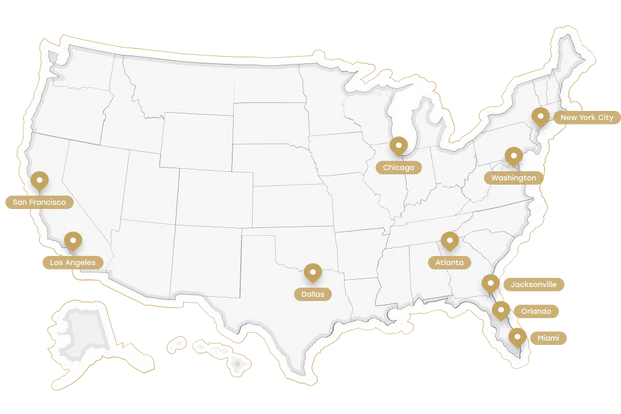
We proudly serve clients across the United States, including major cities such as

· Jacksonville · Orlando · Miami · Atlanta · Dallas · Los Angeles · New York City · Chicago · Washington · San Francisco ·

Free Quote Request

Our Partners

Testimonials

I highly recommend the services of Royal Foam because they are always consistent with their quality of 3D letterings and other products.

Samuel Ridge

Thank You Royal Foam for providing me with the gorgeously designed monument sign I had ordered for my newly opened company.

Danial Bryan

After installing an arch from Royal Foam not only the look has improved but also my home has become a lot more spacious. I suggest and thank Royal Foam. I will contact again to Royal foam for my new arch work at my home. Designs are very good and finishing is also good.

Amy Corey

I had ordered plastic letters to put up in front of my Company and I’m thanks to the quality, come rain or sun, they shine like new always. Thank you for such good products Royal Foam.

Origin Teak

Let's bring your project to life!

Frequently Asked Questions

+
Absolutely! Our niches are lightweight thanks to polyurethane and EPS foam, so you don’t need heavy tools or a crew. A level and some strong adhesive are usually all you need. Even if you’ve never done a project like this before, with a little patience, you can easily install it yourself and give your wall a fresh, stylish upgrade.
+
Not at all! Most niches are super easy to work with, so all you really need is a level, and good adhesive that doesn’t contain acetone. If you’re putting up a bigger niche, anchors can help for extra support, but there’s nothing tricky or complicated—installation is totally doable even for beginners.
+
Yes, definitely! All niches come painted and ready to install, but they surely can be repainted. You can use exterior-grade paint to make it stand up to sun, rain, scratches, or even fading. Go for a subtle shade to blend in, or pick a contrasting color to make your niche really stand out - it’s totally up to your style.
+
Here is the thing: with the right installation, a niche made from polyurethane or EPS foam can easily last 20 years or more. They’re built tough to resist cracking, warping, or fading, even when exposed to harsh weather. Usually, a quick rinse with water is all you need to keep it looking fresh.
+
Absolutely! Exterior wall niches work really well alongside decorative shutters and louver panels. Placing a niche near shutters or combining it with louvers can instantly boost your facade’s style, create a more balanced look, and even add a bit of extra privacy. It’s a simple way to make your walls feel more complete and polished.
+
Definitely! Niches made from polyurethane and EPS foam are built to withstand sun, rain, snow, and temperature swings without cracking, warping, or rotting. Unlike traditional wood, they stay looking great year after year, no matter the season. Plus, if you ever have questions about materials or care, the Royal Foam team is always ready to help.
+
You’re not limited to standard sizes or shapes. Whether you want a tall arched niche, a low modern rectangle, or something completely unique for a tricky spot, it’s all possible. You can choose the style, size, and design that fits your home perfectly.
+
Many of our clients appreciate adding LED strips, small lanterns, or spotlights to their niches. This not only highlights plants, sculptures, or other decorations but also turns your niche into a cozy focal point at night. It can instantly make your facade feel welcoming, stylish, and full of personality—perfect for evening gatherings or just enjoying your outdoor space.
+
All things considered, the ideal spot is at eye level or just above, where it naturally draws people’s attention. Let’s be honest, every house has its own style; some houses are enormously spacious with minimalist designs, some of them bring fulfillment of different stuff. In both cases, houses are already stuffed, and putting wall niches in the middle of nowhere will decrease the interest of either your own or your guests.
+
Of course. One thing you should keep in mind is that they add a special vibe to your interior and definitely increase the value of your building in your surroundings. If you come to the decision to sell your house or even put it on rent, it will provide you with more reasonable prices within your district in the future.

Blog Posts

Custom Exterior Wall Niches

Exterior Wall Niches: Decorative Architectural Accents for Modern Facades

An exterior wall niche transforms an ordinary facade into a visually engaging architectural feature. For example, instead of leaving walls flat and empty, architects and designers use niches to add depth, rhythm, and focal points that improve the look of a building. As a result, whether installed on residential homes, commercial properties, or landscape walls, a well-designed decorative wall niche creates both visual impact and practical use.

Royal Foam produces lightweight exterior foam wall niches that combine durability with design flexibility. In addition, these architectural elements help highlight sculptures, lighting fixtures, signage, or plants while maintaining the structural efficiency required for modern construction. Therefore, builders and architects use niches to turn plain surfaces into memorable design accents that increase the visual value of a project.

With custom sizing, multiple shapes, and weather-resistant finishes, our architectural niches integrate easily into both traditional and contemporary facades. For instance, from Mediterranean villas to minimalist townhouses, a carefully placed niche becomes a key design detail.

What Is an Exterior Wall Niche?

An architectural wall niche is a recessed or framed section built into the exterior surface of a building. Historically, niches were used to display statues or lanterns on religious and civic structures. Today, however, they serve broader architectural purposes while keeping their decorative character.

A niche visually breaks large wall surfaces and adds depth through shadow and relief. As a result, this architectural pause draws the viewer’s eye and helps guide visual movement across a facade. In addition, designers often use niches to highlight entryways, frame decorative objects, or emphasize landscape lighting.

Modern niches can be customized in size, shape, and finish to match different architectural styles. Therefore, they blend naturally with classical houses, cottages, contemporary villas, or commercial buildings while keeping a consistent design style.

Why Exterior Wall Niches Are Popular in Modern Architecture

Exterior niches provide both visual and functional advantages. First of all, one of their main roles is creating a welcoming atmosphere. A carefully placed decorative exterior niche adds texture and dimension that turn a plain wall into an inviting architectural feature.

Niches also allow easy integration of lighting, vents, or small decorative elements. For example, designers often install LED strips or lanterns inside niches to create soft evening lighting that highlights sculptures, plants, or wall textures.

Because niches guide visual focus, they often become key focal points that strengthen a building’s character. As a result, even a small niche can improve the overall look of a property and increase curb appeal.

Durability and Material Performance

Royal Foam exterior niches are made from high-density EPS foam with protective coatings. As a result, this lightweight material resists cracking, warping, and fading, making it suitable for long-term outdoor use.

Unlike wood or plaster elements, EPS foam keeps its shape despite temperature changes and humidity. In addition, protective finishes shield the surface from moisture, sunlight, and environmental wear.

Therefore, the result is a decorative feature that keeps its shape and appearance for many years with minimal maintenance.

Types of Exterior Wall Niches

Common Shapes and Styles

Different architectural styles require different niche shapes. For example, one of the most popular designs is the arched wall niche, which fits Mediterranean, Colonial, and classical architecture. In particular, these niches highlight vertical lines and add elegance to facades.

Rectangular niches, on the other hand, provide a clean and modern look. Their simple shape works well in contemporary homes and commercial buildings where minimalism is important.

Modern niche designs often focus on simple details and built-in lighting. As a result, these elements highlight facade textures while keeping a clean and modern style.

Decorative niches with additional moldings or frames add more expressive design accents. For instance, layered frames, light trim, or built-in lighting increase visual impact without overwhelming the structure.

Design and Aesthetic Impact

The placement of an exterior niche strongly affects how it looks. For example, installing a niche at eye level creates a clear focal point that draws attention and balances the facade.

Color contrast can also improve the design. For instance, painting the inside of the niche in a matching color or adding warm LED lighting creates depth and highlights decorative objects.

Repetition also helps create visual harmony. For example, a row of niches adds rhythm and symmetry, while a single arched niche adds a classic accent.

Exterior Wall Niche Applications

Exterior niches appear in many architectural settings. For example, they are commonly used in:

  • residential homes near entrances or patios
  • landscape walls, garden terraces, and courtyards
  • commercial buildings to break up large wall surfaces

In addition, designers use them to display plants, fountains, sculptures, lighting, or signage that improve both function and appearance.

Practical Advantages of Exterior Wall Niches

Beyond appearance, niches offer practical benefits. First, EPS foam niches are lightweight but still strong, which makes installation easier and reduces stress on walls.

Most niches arrive ready for installation. Therefore, contractors can install them quickly using adhesives and basic tools.

Maintenance is also minimal. For example, simple cleaning or repainting keeps the surface fresh, while the structure stays stable for many years.

Installation Considerations

Successful installation starts with accurate measurements. First, the niche must fit properly in the wall space to keep balance and alignment.

Before installation, the surface should be cleaned and prepared. As a result, this ensures strong adhesion. In addition, adhesives designed for foam elements provide reliable attachment without damage.

Larger niches may require anchors or extra support. Therefore, Royal Foam provides guidance to help ensure safe and clean installation.

Exterior Wall Niche Placement Ideas

Designers often place niches symmetrically near entry doors. As a result, this creates a welcoming focal point and highlights the entrance.

Garden walls also benefit from niches. For example, they can display plants, lanterns, or water features, turning simple walls into decorative spaces.

Terraces and patios often include rows of rectangular niches. For instance, they can hold candles or seasonal decor, creating a modern visual rhythm.

Finally, when combined with shutters or trim, niches add depth and strengthen the overall architectural composition of the building.


Custom exterior wall niches

Request a fast quote!

Contacts

Catalogue