


 Download PDF
 Download PDF
 Download PDF
 Download PDF
 Download PDF
 Download PDF
 Download PDF
 Download PDF
 Download PDF
 Download PDF

Foam Routed Signs 1

Foam Routed Signs 2

Foam Routed Signs 3

Foam Routed Signs 4

Foam Routed Signs 5

Foam Routed Signs 6

Foam Routed Signs 7

Foam Routed Signs 8
| Height (H), in | Depth (D), in | Length (L), in |
|---|---|---|
| 12" | 1" | 24" |
| 12" | 2" | 36" |
| 18" | 1" | 36" |
| 18" | 2" | 48" |
| 24" | 2" | 48" |
| 24" | 5" | 60" |
| 36" | 2" | 60" |
| 36" | 5" | 72" |
| 48" | 5" | 72" |
| 48" | 6" | 96" |
| 55" | 5" | 96" |
| 55" | 6" | 120" |
| Length (L), in | Depth (D), in | Height (H), in |
|---|---|---|
| 24" | 4" | 65" |
| 26" | 4" | 65" |
| 28" | 4" | 65" |
| 32" | 4 1/2" | 70" |
| 34" | 4 1/2" | 70" |
| 36" | 4 1/2" | 70" |
| 48" | 5" | 90" |
| 52" | 5" | 90" |
| 56" | 5" | 90" |
| 60" | 5 1/2" | 105" |
| 64" | 5 1/2" | 105" |
| 68" | 5 1/2" | 105" |
| Width (W), foot | Height (H), in | Depth (D), in |
|---|---|---|
| 10' | 8" | 7" |
| 10' | 10" | 7" |
| 12' | 8" | 8" |
| 12' | 10" | 8" |
| 14' | 8" | 8 1/2" |
| 14' | 10" | 8 1/2" |
| 16' | 8" | 9" |
| 16' | 10" | 9" |
| 18' | 12" | 9 1/2" |
| 20' | 12" | 9 1/2" |
| 24' | 12" | 10" |
| 32' | 12" | 10" |

Door Surround-Door 016

Door Surround-Door 014

Door Surround-Door 011

Door Surround-Door 002
| Width (W), in | Height (H), in | Depth (D), in |
|---|---|---|
| 48" | 72" | 7" |
| 48" | 80" | 7" |
| 54" | 72" | 8" |
| 54" | 80" | 8" |
| 60" | 80" | 8 1/2" |
| 60" | 82" | 8 1/2" |
| 72" | 82" | 9" |
| 72" | 84" | 9" |
| 110" | 82" | 9 1/2" |
| 110" | 84" | 9 1/2" |
| 120" | 82" | 10" |
| 120" | 84" | 10" |
| Length (L), in | Depth (D), in | Height (H), in |
|---|---|---|
| 24" | 4" | 65" |
| 26" | 4" | 65" |
| 28" | 4" | 65" |
| 32" | 4 1/2" | 70" |
| 34" | 4 1/2" | 70" |
| 36" | 4 1/2" | 70" |
| 48" | 5" | 90" |
| 52" | 5" | 90" |
| 56" | 5" | 90" |
| 60" | 5 1/2" | 105" |
| 64" | 5 1/2" | 105" |
| 68" | 5 1/2" | 105" |
| Width (W), foot | Height (H), in | Depth (D), in |
|---|---|---|
| 10' | 8" | 7" |
| 10' | 10" | 7" |
| 12' | 8" | 8" |
| 12' | 10" | 8" |
| 14' | 8" | 8 1/2" |
| 14' | 10" | 8 1/2" |
| 16' | 8" | 9" |
| 16' | 10" | 9" |
| 18' | 12" | 9 1/2" |
| 20' | 12" | 9 1/2" |
| 24' | 12" | 10" |
| 32' | 12" | 10" |

Door Surround-Door 036

Door Surround-Door 042

Door Surround-Door 025

Door Surround-Door 023
| Width (W), in | Height (H), in | Depth (D), in |
|---|---|---|
| 48" | 72" | 7" |
| 48" | 80" | 7" |
| 54" | 72" | 8" |
| 54" | 80" | 8" |
| 60" | 80" | 8 1/2" |
| 60" | 82" | 8 1/2" |
| 72" | 82" | 9" |
| 72" | 84" | 9" |
| 110" | 82" | 9 1/2" |
| 110" | 84" | 9 1/2" |
| 120" | 82" | 10" |
| 120" | 84" | 10" |
| Length (L), in | Depth (D), in | Height (H), in |
|---|---|---|
| 24" | 4" | 65" |
| 26" | 4" | 65" |
| 28" | 4" | 65" |
| 32" | 4 1/2" | 70" |
| 34" | 4 1/2" | 70" |
| 36" | 4 1/2" | 70" |
| 48" | 5" | 90" |
| 52" | 5" | 90" |
| 56" | 5" | 90" |
| 60" | 5 1/2" | 105" |
| 64" | 5 1/2" | 105" |
| 68" | 5 1/2" | 105" |
| Width (W), foot | Height (H), in | Depth (D), in |
|---|---|---|
| 10' | 8" | 7" |
| 10' | 10" | 7" |
| 12' | 8" | 8" |
| 12' | 10" | 8" |
| 14' | 8" | 8 1/2" |
| 14' | 10" | 8 1/2" |
| 16' | 8" | 9" |
| 16' | 10" | 9" |
| 18' | 12" | 9 1/2" |
| 20' | 12" | 9 1/2" |
| 24' | 12" | 10" |
| 32' | 12" | 10" |
| Property | Our Material (EPS) | Wood | Concrete | Polyurethane | Fiberglass |
|---|---|---|---|---|---|
| Weight | Very lightweight | Medium | Very heavy | Light | Light |
| Thermal Insulation | Excellent | Moderate | Poor | Excellent | Good |
| Moisture Resistance | High (does not absorb water) | Low (absorbs moisture) | Medium | High | Medium |
| Durability | Long-lasting, stable | Can rot or warp | Very durable | Durable | Fragile over time |
| Fire Behavior | Melts under high heat | Burns | Fire-resistant | Flammable (treated variants available) | Non-combustible |
| Ease of Installation | Easy, fast, low labor cost | Moderate | Difficult, labor-intensive | Moderate | Requires protection gear |
| Customization | Highly customizable shapes & sizes | Limited | Very limited | Moderate | Limited |
| Cost | Affordable | Medium to high | High | High | Medium |
Each our decorative architectural foam product is unique. We don’t “print” identical beams — we craft them as individual architectural pieces.
Discuss my project
| Value / Service | Our company | Competitors |
|---|---|---|
| Free Design Support | ✔ Included in every project | ✖ Usually not available |
| Product Customization | ✔ Fully customized solutions | ✖ Limited options |
| Engineering Consultation | ✔ Direct access to engineers | ✖ Rare or paid |
| Unique Prototype Development | ✔ Yes, tailored prototypes | ✖ Not offered |
| Personal Project Manager | ✔ Dedicated manager for each client | ✖ Not standard |
| Speed of Production | ✔ Fast turnaround | ✖ Slower processes |
| Client Support | ✔ Ongoing support at all stages | ✖ Limited after-sales support |
| Flexibility | ✔ Tailored to any client requirements | ✖ Standard solutions only |


Step 1. Adaptation
If you have a finished project, we adapt it for production and installation, preserving every detail.
Step 2. Define your vision
Capture a clear picture of the client’s ideas before moving to design and rendering.
Step 3. Plan specifications
Outline measurements, production methods, and finalize materials, components, and finishes.
Step 4. Installation
Our team ensures precise setup, perfectly aligning your custom surround with the space.

Step 1. Define your vision
The aim of this step is to capture a precise picture of the client’s vision before proceeding to technical design and visual rendering.
Step 2. Plan specifications
During this phase, we define the specifications, production methods, and measurements, while finalizing the look by selecting materials, elements, and finishes.
Step 3. Installation
Once fabrication is complete, our installation team will handle every aspect of the setup, ensuring your custom surround is fitted with accuracy and seamlessly integrated into your space.
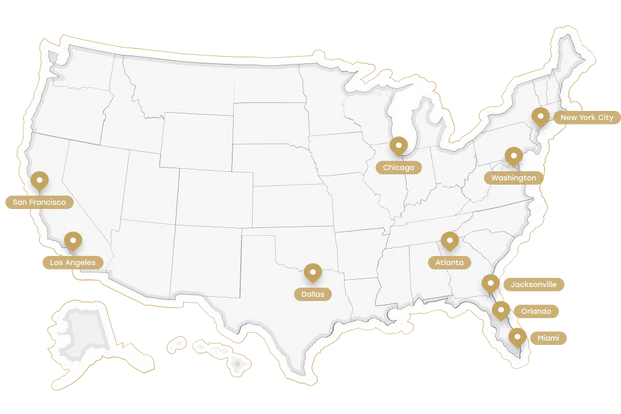
We proudly serve clients across the United States, including major cities such as
· Jacksonville · Orlando · Miami · Atlanta · Dallas · Los Angeles · New York City · Chicago · Washington · San Francisco ·


Their custom work is unmatched. I had a historic renovation project that required matching existing 1920s archway details, and the team nailed it. The expanded polystyrene significantly speeds up installation times compared to working with actual stone or concrete, my crew loves it.
Timothy Meyer
Thank You Royal Foam for providing me with the gorgeously designed monument sign I had ordered for my newly opened company.
Daniel Bryan
We ordered decorative window arches and keystones from Royal Foam, and they fit perfectly with the colonial style of our house. I was nervous about ordering online, but the consultation process was thorough and helpful, and they answered all my questions about installation and weather protection. Highly recommend.
Kevin Farley

Property owners and managers want to choose an outdoor sign that will impress visitors. And preferably at an affordable price, quickly, and without unnecessary hassle. Choosing an outdoor sign often comes down to a choice between design, cost, and practicality. But which material should you choose? Concrete and metal are heavy and expensive to work with, seriously limiting the freedom of form, creating challenges with installation, and complicating the calculation of wind-load-resistant signage.
This article is an expert guide to exterior sign fabrication. We'll provide a detailed and visual overview of the full cycle of creating custom dimensional signs. You'll discover why our products outperform traditional counterparts in durability, cost effectiveness, and design freedom..
A Royal Foam expert prepared this article. The conclusion is based on 15+ years of practical experience in the production of architectural and signage elements, realized through our own production process.
These are three-dimensional signs manufactured using high-precision milling from PU foam, creating a three-dimensional geometry unachievable with flat panels.
| Characteristic | Foam Routed Signs - 3D Signage | Flat Panel Signs - 2D Signage |
|---|---|---|
| Geometry & Perception | Volume, depth, tactility. Create shadows and interplay of light, visible from any angle. | Flat, two-dimensional surface. Graphics are applied to a plane without relief. |
| Production | CNC routing, layer lamination, hand finishing. Allows creation of complex 3D forms and beveled edges. | Printing (digital, UV), vinyl application, applying decals to a finished panel. |
| Materials | PU foam. Lightweight yet durable. | Acrylic, aluminum composite, PVC, plastic. |
| Key Advantage | Image Impact & Durability: Create a sense of solidity and premium quality, resistant to weather conditions. | Cost-Effectiveness & Speed: Optimal for quick advertising campaigns, changeable messages, and limited budgets. |
| Ideal For | Permanent brand identification, main entrances, objects where status and first impression are crucial. | Temporary promotions, indoor information, situations where low cost is the key factor. |
This technology is especially in demand where a combination of presentable appearance, durability, and custom design is required: Monument Signs are ideal for creating a durable, landscape-integrated sign at the entrance to a business park, residential complex, campus, or shopping center.
Building Signage is suitable for three-dimensional logos and company names on facades. Depth and detail make the brand recognizable from a distance. Entry Signs and Wayfinding are ideal for columns and signage on the premises of hotels, medical centers, or universities. Tactility is beneficial not only for design but also for ADA accessibility compliance. Branding Elements - Individual three-dimensional letters in interiors, corporate crests, stylized numbers - any elements that highlight the brand's uniqueness.
Our production process begins with the selection of PU foam. This design ensures its low moisture transfer coefficient, making it completely water-resistant and decay-resistant.
CNC milling with the utmost precision embodies any 3D geometry from a digital model in this material - from simple letters to complex bas-reliefs and textures. Final strength and durability are achieved during the finishing stage. This system guarantees a sign's service life of 10+ years in the most aggressive street environments, transforming it from an information carrier into a permanent architectural element that enhances the image and value of your property.
We use Polyurethane foam. It is a high-density, dimensionally stable material designed to create high-quality architectural elements that require both structural integrity and a superior finish. Unlike lighter materials, polyurethane foam serves as both a molding base and a finished decorative surface for high-quality applications. At approximately 15 lb/ft³, it is 10-15 times denser than standard polystyrene foam.
CNC milling transforms a digital model into a precise 3D object made of durable foam. This process creates a detailed relief with clear edges and texture. This technology guarantees the identity of elements and reproduces even the most complex shapes. The process is fast, predictable, and minimizes waste.
We have a full range of equipment, enabling us to select the optimal, cost-effective method for your project.
We analyze your specifications, design, operating conditions, and budget. Our engineering team determines the best manufacturing method. This key decision determines the timeframe, cost, and final product properties.
We use 3D scanning or create a master model using a 7-axis robotic arm and an industrial 3D printer. It’s a basis for programming CNC machines or for making molds.
We create products using a variety of methods, choosing the most efficient method for each task.
For complex 3D shapes and signs, we cut the blank from a solid block of dense polystyrene foam on a 5-axis CNC machine.
We use hot-cutting machines for large panels and serialized elements. This allows us to quickly and accurately create large volumes. We can work with parts up to 32 feet long.
We have specialized CNC machines for mass-produced architectural parts. These ensure the absolute identity of hundreds of elements.
If a project requires casting, we first create a precise mold and then cast the part on specialized vibration- or rotary-casting machines. This method is ideal for working with composites.
We inspect products for compliance with drawings and visual standards. Our team uses individual protective packaging. It helps to prevent damage during transportation.
We create the product and recycle the waste. Polystyrene foam scraps are fed into a compaction and crushing system to become raw material for new applications. This minimizes environmental impact.
This comprehensive approach allows Royal Foam to guarantee the highest quality, meet deadlines, and complete projects of any complexity. We offer technologically sound architectural solutions.
Our technology enables the creation of several key types of architectural signage. Milled logo-based signs transform corporate logos into precise 3D formats. A monoblock design enables the creation of seamless, large-format signs with the option to integrate backlighting. Monumental and pylon signs create a dominant, prestigious image at building entrances. Wall-mounted architectural signs seamlessly integrate with building facades.
Entrance and directional signs provide straightforward and durable navigation throughout campuses and complexes. With cut-out pictograms and text optimized for tactile readability, they are weather-resistant and maintenance-free throughout their lifespan.
Our Foam Routed Signs withstand the harshest climates thanks to a thoughtful materials and installation approach. We design our products for long-term service in environments with hurricane-force winds, extreme UV radiation, and high humidity, conditions that are especially challenging in Florida.
Our system reduces wind drag and resists winds using two key principles. The lightweight foam core minimizes the structure's overall weight, reducing wind forces compared to concrete or metal alternatives.
The material system is completely climate-neutral. We select materials with a matched coefficient of thermal expansion.
We use a multi-layer finish. The final layers are applied with acrylic or polyurethane paints enriched with UV inhibitors and stabilizers. Our products are designed to withstand extreme conditions.
| Parameter | Concrete | Metal | Plastic | PU Foam | Why It Matters |
|---|---|---|---|---|---|
| Weight | Very High Extremely heavy, requires heavy machinery for transport and installation. | High Solid aluminum or steel sheets add significant weight. | Low Lightweight, but can feel insubstantial. | Very Low High-density foam core makes it exceptionally lightweight. | Impact: Lighter weight drastically reduces shipping costs, eliminates the need for cranes, simplifies on-site handling, and removes the requirement for heavy-duty structural support or deep foundations. |
| Detailing | Medium Limited to cast molds; fine details are difficult and costly to achieve. | High Good for precision laser/waterjet cutting of 2D shapes; 3D forms require complex fabrication. | Medium Suitable for molded shapes; fine detail can be lost, and edges may not be sharp). | Very High CNC routing allows for intricate 3D carving, sharp edges, complex logos, and textured finishes with good repeatability. | Impact: Enables premium, custom-branded aesthetics with architectural depth. Good for reproducing detailed logos and creating unique designs that stand out, enhancing brand perception. |
| Wind Load | High Solid mass is resistant to movement but creates a huge sail effect, transferring massive force to foundations. | High Similar issue as concrete; large flat panels catch wind, requiring robust and costly structural support. | Medium Lightweight can be an advantage, but large, flat panels can flex, vibrate, or detach in high winds. | Low A lightweight core inherently reduces force. Design can incorporate perforations or textured surfaces to break up wind flow. Properly engineered mounting manages residual load. | Impact: Enhances safety and longevity in windy or hurricane-prone areas (like Florida). Allows for the use of less massive and expensive support structures and foundations, lowering total project cost. |
Here are three real-life cases demonstrating the use of Foam Routed Signs technology to solve complex architectural and branding challenges.
The client's task was to create a stately entrance for a premium residential complex that would withstand hurricane-force winds and the humid, salty air of Florida. The complex's logo and name needed to be integrated into a monumental yet elegant form.
We used a double-sided monument sign with a total height of 4.2 m. It was a complex composite form with pylons, curved elements, and integrated 40 cm-tall, three-dimensional letters.
The client received a lightweight yet highly durable stele, which became the visual focal point of the entrance. This solution eliminated annual touch-up and repair costs, and PU foam material was guaranteed for 10 years.
The client's task was to update an outdated flat sign on the façade of a financial corporation's head office.
We used a composite composition of dimensional letters and a graphic logo symbol. We painted it in a precise RAL color with a matte finish varnish to protect it from fading. The lightweight design allowed it to be mounted on the existing façade without additional reinforcement.
These cases illustrate how Foam Routed Signs technology adapts to unique requirements. We offer solutions that combine aesthetics, durability, and cost effectiveness throughout the product's entire life cycle.
When selecting a material for architectural signage, the key criterion for businesses should be total cost of ownership, not just the initial price. Foam Routed Signs excel in this area thanks to a range of economic advantages at every stage of the product's lifecycle.
The weight of a finished structure is 5-15 times lighter than that of a concrete or stone equivalent of the same size. This directly reduces transportation costs by 40-60%. You can transport more items in a single trip using standard trucks without the need for heavy-duty vehicles. Furthermore, the risks and costs associated with complex loading and unloading operations on the construction site are reduced.
Our technology creates an inert barrier that requires no maintenance. Unlike wood, metal, or concrete, our signs retain their integrity and color for 15+ years without any intervention. You don't need to plan for or finance annual touch-ups, seam sealing, or repairs. 4. Reduced Hidden and Structural Costs
Thanks to their low weight and windage, there's no need for a massive, expensive foundation or reinforcement of the building's supporting structures for wall mounting. This allows savings of up to 30% on the total project cost for preparatory and construction work, which is often not included in the initial sign-in estimate.
If you think of TCO as a formula that combines Purchase + Delivery + Installation + Maintenance over 10-15 years, Foam Routed Signs are invariably the most cost-effective solution. The higher initial cost compared to plastic or some metal structures is recouped many times over in the first few years of use through savings on logistics, installation, and the complete absence of maintenance costs. You're investing in a long-lasting asset that will enhance your image for decades without additional investment.
The reliability and durability of Foam Routed Signs depend 100% on professional installation. Unlike traditional materials, where most of the work occurs on-site, our philosophy is to integrate installation solutions into the product during production.
Installation planning is built into the product design from the very beginning. Reinforced attachment points are integrated into the base material. This approach ensures easy on-site assembly without the use of heavy equipment and prevents damage.
The sign type and the object determine the mounting method. For wall-mounted signs, concealed mounting is used with Z-shaped or flat aluminum or stainless steel brackets. The brackets are attached to the wall. The sign is hung on them and secured through pre-drilled holes in the frame. This creates a "floating" effect and allows all fasteners to be hidden.
For steles and memorial signs, the structure is mounted on a prefabricated metal frame, which is then concreted into the foundation.
For above-ground structures, we provide detailed foundation drawings showing the dimensions, depths, and locations of embedded parts. A properly prepared foundation is the key to resistance to wind loads. For façade installations, we request wall material data to recommend anchor types.
Most problems arise from attempts to install an engineered product as a conventional structure.
Mistake: Using inappropriate fasteners causes the material to split.
Solution: Use only the provided fastener kit and follow the installation diagram.
Mistake: Failure to follow the instructions for anchoring the frame to the foundation, leading to the structure collapsing in strong winds.
Solution: Strictly follow the provided engineering calculations and foundation drawings.
Engineering solutions, internal standards, testing, and transparent warranty policies confirm the reliability of Royal Foam Foam Routed Signs. This allows us to position our products as a proven exterior-rated system.
The PU foam has zero water absorption, as confirmed by frost resistance tests. Moisture cannot penetrate, eliminating the risk of swelling, delamination, corrosion of hidden elements, or freeze damage.
We provide a warranty of up to 10 years. It is valid only for professional installation performed in accordance with our engineering recommendations and drawings. Incorrect installation will void the warranty.
We rely on internal technical specifications developed over years of operating experience across various climatic zones. Critical parameters are verified using samples. Our products de facto meet key requirements for exterior building and finishing systems in terms of weather resistance, although formal building certifications are often not required in this segment.
Our system is designed to last 15+ years without compromising aesthetics or functionality.
Modern businesses demand solutions that combine impeccable aesthetics with uncompromising reliability. By choosing Royal Foam, you gain access to a technological partnership grounded in key principles. All products are manufactured in the USA at our own facility, guaranteeing complete control over every stage, from material cutting to final painting, and allowing us to meet strict deadlines.
Contact Royal Foam today and transform your concept into a good architectural reality that lasts. We set and strictly adhere to precise production and delivery deadlines, allowing you to plan your budget and construction work without risk or delay.
Ready to build a project that will last for decades? Request a free engineer consultation and receive an expert assessment of your project. Calculate an accurate cost based on your specifications or sketches. Discuss a custom project to receive a comprehensive turnkey proposal.
Ready to estimate your project? Our engineers will prepare a precise estimate, 3D visualization, and a comprehensive proposal in the shortest possible time. Simply send us your logo, sketch, or description of the task.