


 Download PDF
 Download PDF
 Download PDF
 Download PDF
 Download PDF
 Download PDF
 Download PDF
 Download PDF
 Download PDF
 Download PDF

Wedding Arch Colonnades 1

Wedding Arch Colonnades 2

Wedding Arch Colonnades 3

Wedding Arch Colonnades 4

Wedding Arch Colonnades 5

Wedding Arch Colonnades 6

Wedding Arch Colonnades 7

Wedding Arch Colonnades 8
| Height (H), in | Depth (D), in | Diameter (D), in |
|---|---|---|
| 96" | 96" | 96" |
| 120" | 120" | 120" |
| 144" | 144" | 144" |
| Length (L), in | Depth (D), in | Height (H), in |
|---|---|---|
| 24" | 4" | 65" |
| 26" | 4" | 65" |
| 28" | 4" | 65" |
| 32" | 4 1/2" | 70" |
| 34" | 4 1/2" | 70" |
| 36" | 4 1/2" | 70" |
| 48" | 5" | 90" |
| 52" | 5" | 90" |
| 56" | 5" | 90" |
| 60" | 5 1/2" | 105" |
| 64" | 5 1/2" | 105" |
| 68" | 5 1/2" | 105" |
| Width (W), foot | Height (H), in | Depth (D), in |
|---|---|---|
| 10' | 8" | 7" |
| 10' | 10" | 7" |
| 12' | 8" | 8" |
| 12' | 10" | 8" |
| 14' | 8" | 8 1/2" |
| 14' | 10" | 8 1/2" |
| 16' | 8" | 9" |
| 16' | 10" | 9" |
| 18' | 12" | 9 1/2" |
| 20' | 12" | 9 1/2" |
| 24' | 12" | 10" |
| 32' | 12" | 10" |

Door Surround-Door 016

Door Surround-Door 014

Door Surround-Door 011

Door Surround-Door 002
| Width (W), in | Height (H), in | Depth (D), in |
|---|---|---|
| 48" | 72" | 7" |
| 48" | 80" | 7" |
| 54" | 72" | 8" |
| 54" | 80" | 8" |
| 60" | 80" | 8 1/2" |
| 60" | 82" | 8 1/2" |
| 72" | 82" | 9" |
| 72" | 84" | 9" |
| 110" | 82" | 9 1/2" |
| 110" | 84" | 9 1/2" |
| 120" | 82" | 10" |
| 120" | 84" | 10" |
| Length (L), in | Depth (D), in | Height (H), in |
|---|---|---|
| 24" | 4" | 65" |
| 26" | 4" | 65" |
| 28" | 4" | 65" |
| 32" | 4 1/2" | 70" |
| 34" | 4 1/2" | 70" |
| 36" | 4 1/2" | 70" |
| 48" | 5" | 90" |
| 52" | 5" | 90" |
| 56" | 5" | 90" |
| 60" | 5 1/2" | 105" |
| 64" | 5 1/2" | 105" |
| 68" | 5 1/2" | 105" |
| Width (W), foot | Height (H), in | Depth (D), in |
|---|---|---|
| 10' | 8" | 7" |
| 10' | 10" | 7" |
| 12' | 8" | 8" |
| 12' | 10" | 8" |
| 14' | 8" | 8 1/2" |
| 14' | 10" | 8 1/2" |
| 16' | 8" | 9" |
| 16' | 10" | 9" |
| 18' | 12" | 9 1/2" |
| 20' | 12" | 9 1/2" |
| 24' | 12" | 10" |
| 32' | 12" | 10" |

Door Surround-Door 036

Door Surround-Door 042

Door Surround-Door 025

Door Surround-Door 023
| Width (W), in | Height (H), in | Depth (D), in |
|---|---|---|
| 48" | 72" | 7" |
| 48" | 80" | 7" |
| 54" | 72" | 8" |
| 54" | 80" | 8" |
| 60" | 80" | 8 1/2" |
| 60" | 82" | 8 1/2" |
| 72" | 82" | 9" |
| 72" | 84" | 9" |
| 110" | 82" | 9 1/2" |
| 110" | 84" | 9 1/2" |
| 120" | 82" | 10" |
| 120" | 84" | 10" |
| Length (L), in | Depth (D), in | Height (H), in |
|---|---|---|
| 24" | 4" | 65" |
| 26" | 4" | 65" |
| 28" | 4" | 65" |
| 32" | 4 1/2" | 70" |
| 34" | 4 1/2" | 70" |
| 36" | 4 1/2" | 70" |
| 48" | 5" | 90" |
| 52" | 5" | 90" |
| 56" | 5" | 90" |
| 60" | 5 1/2" | 105" |
| 64" | 5 1/2" | 105" |
| 68" | 5 1/2" | 105" |
| Width (W), foot | Height (H), in | Depth (D), in |
|---|---|---|
| 10' | 8" | 7" |
| 10' | 10" | 7" |
| 12' | 8" | 8" |
| 12' | 10" | 8" |
| 14' | 8" | 8 1/2" |
| 14' | 10" | 8 1/2" |
| 16' | 8" | 9" |
| 16' | 10" | 9" |
| 18' | 12" | 9 1/2" |
| 20' | 12" | 9 1/2" |
| 24' | 12" | 10" |
| 32' | 12" | 10" |
| Property | Our Material (EPS) | Wood | Concrete | Polyurethane | Fiberglass |
|---|---|---|---|---|---|
| Weight | Very lightweight | Medium | Very heavy | Light | Light |
| Thermal Insulation | Excellent | Moderate | Poor | Excellent | Good |
| Moisture Resistance | High (does not absorb water) | Low (absorbs moisture) | Medium | High | Medium |
| Durability | Long-lasting, stable | Can rot or warp | Very durable | Durable | Fragile over time |
| Fire Behavior | Melts under high heat | Burns | Fire-resistant | Flammable (treated variants available) | Non-combustible |
| Ease of Installation | Easy, fast, low labor cost | Moderate | Difficult, labor-intensive | Moderate | Requires protection gear |
| Customization | Highly customizable shapes & sizes | Limited | Very limited | Moderate | Limited |
| Cost | Affordable | Medium to high | High | High | Medium |
Each our decorative architectural foam product is unique. We don’t “print” identical beams — we craft them as individual architectural pieces.
Discuss my project
| Value / Service | Our company | Competitors |
|---|---|---|
| Free Design Support | ✔ Included in every project | ✖ Usually not available |
| Product Customization | ✔ Fully customized solutions | ✖ Limited options |
| Engineering Consultation | ✔ Direct access to engineers | ✖ Rare or paid |
| Unique Prototype Development | ✔ Yes, tailored prototypes | ✖ Not offered |
| Personal Project Manager | ✔ Dedicated manager for each client | ✖ Not standard |
| Speed of Production | ✔ Fast turnaround | ✖ Slower processes |
| Client Support | ✔ Ongoing support at all stages | ✖ Limited after-sales support |
| Flexibility | ✔ Tailored to any client requirements | ✖ Standard solutions only |


Step 1. Adaptation
If you have a finished project, we adapt it for production and installation, preserving every detail.
Step 2. Define your vision
Capture a clear picture of the client’s ideas before moving to design and rendering.
Step 3. Plan specifications
Outline measurements, production methods, and finalize materials, components, and finishes.
Step 4. Installation
Our team ensures precise setup, perfectly aligning your custom surround with the space.

Step 1. Define your vision
The aim of this step is to capture a precise picture of the client’s vision before proceeding to technical design and visual rendering.
Step 2. Plan specifications
During this phase, we define the specifications, production methods, and measurements, while finalizing the look by selecting materials, elements, and finishes.
Step 3. Installation
Once fabrication is complete, our installation team will handle every aspect of the setup, ensuring your custom surround is fitted with accuracy and seamlessly integrated into your space.
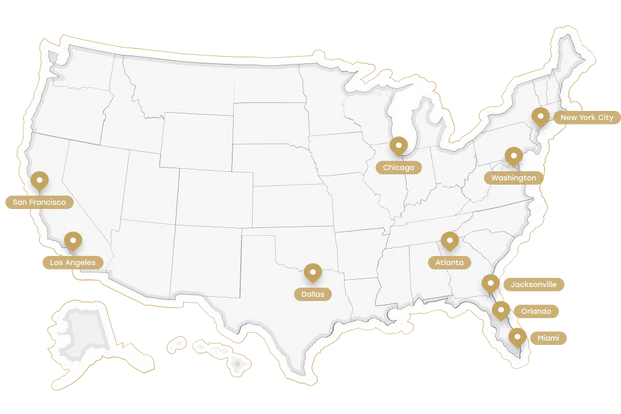
We proudly serve clients across the United States, including major cities such as
· Jacksonville · Orlando · Miami · Atlanta · Dallas · Los Angeles · New York City · Chicago · Washington · San Francisco ·


I highly recommend the services of Royal Foam because they are always consistent with their quality of 3D letterings and other products.
Samuel Ridge
Thank You Royal Foam for providing me with the gorgeously designed monument sign I had ordered for my newly opened company.
Daniel Bryan
After installing an arch from Royal Foam not only the look has improved but also my home has become a lot more spacious. I suggest and thank Royal Foam. I will contact again to Royal foam for my new arch work at my home. Designs are very good and finishing is also good.
Amy Corey

Wedding arches look like a light gesture above the aisle, yet they set the rhythm for the entire day of the wedding ceremony — where the procession starts and stops, how cameras read the space, when the florist can safely approach, and whether the schedule breathes or suffocates. If the arch for the wedding arrives late, everything downstream compresses; if it leans, even imperceptibly, the whole scene feels uneasy; if the frame is too heavy or awkward to carry, you lose hours to simple handling. We take care of the tricky details upfront so that when guests take their seats, the structure isn’t something they see — just part of the calm around them.
Call it a frame, a portal, an axis line -- the wedding arch is how you pin geometry to the landscape. Somehow everything orients itself to it — the seating, the lenses, even the way people walk the space. That is why experienced crews treat wedding arches less like “décor” and more like a critical interface between design and logistics. The wedding arch is usually the first hard element to land on site; it’s the last allowed to misbehave. When it stays true to the plan, everything looks intentional and the crew relaxes (which is visible on camera, even if you don’t name it). When the floral arch works against the crew — tolerances off, weight hidden in the wrong places, anchors awkward — tension builds fast and small delays snowball.
Before we even think about cutting material, we try to understand what this arch really has to be — not just how it should look in the render. We start with questions that seem minor at first but quietly end up shaping everything that follows. How should it make the place feel when people see it? Is it strict and symmetrical, or more sculptural and off-balance — something light and fabric-driven or something that needs to hold dense florals without flinching?
Then we step back and think about the site itself. Door widths, stair runs, elevator car depth, the slope of the lawn, how wind sneaks through, even whether the ground is turf, stone, decking or soft sand — because all of that quietly decides how big the wedding arch modules can be and how many hands it will take to move them safely for the wedding ceremony. We try to see the ceremony arch colonnade the way the photographer will — flattened into angles and lines.
What angles matter, how close lenses will get, what might block the view — stray posts, trees, a bright horizon line. If the sun hits from behind, even perfect geometry can read as crooked on screen. And of course, there’s the human side of the build: how many people can safely carry each wedding arch piece, how far they’ll need to carry it, whether lifts are allowed at all, or if everything must be sized for two people on foot.
Only then do we talk about the budget — and not just a number, but what really matters most for this project. Do we push for speed or refinement, a one-off showpiece or a frame that can work again, bespoke geometry or modular parts? It’s in those trade-offs that the design quietly starts to settle into place.
This intake is where we decide whether a sculptural ellipse is worth the extra joints, whether wedding collonnades (repeating columns in rows or arcs) will deliver the same visual authority with less risk, and which finishes will look premium at camera distance without burdening the crew.
We engineer wedding arch decor like small architecture, not stage props. The brief is always the same: high stiffness at low weight, with joints that lock without tools.
Inside, it’s just composite foam over thin poles: the foam gives us the shape, the poles quietly do the heavy lifting — strong enough to stand, light enough to carry without grumbling. CNC-cut interfaces. We cut tenon/receiver details so modules register themselves; on site, this feels like puzzle pieces that “want” to be together. We fight torsion early: slim internal ribs keep the shape from racking, and on wide spans we add subtle bracing behind the scenes — far enough out of sight that lenses never notice.
Moisture-blocking primer that cures fast and sands clean, sealing cut edges so dew or drizzle doesn’t telegraph through. UV-stable acrylic topcoats that tolerate handling, carry color predictably, and don’t flash on camera. Optional veneers (faux brick or stone texture) when the art direction wants “weight” without actual mass.
Hidden ballast sleeves built into bases so stability doesn’t look like hardware. Ground spreaders for turf and sand; anti-slip interlayers for polished decks; low-profile plates for stone with shear collars, if permitted. Cable or screw anchors only with venue approval; we always protect finished floors with shims and pads. The point is not fetishizing materials; it’s giving crews parts that behave politely under pressure, so no one is forced to “make it work” with a drill an hour before guests arrive to see the ceremony arch.
Over the years, we’ve learned that some wedding arches just cooperate — they travel cleanly, land without fuss, and stay where you put them. Others might look incredible in a render but fight you the moment they hit real ground on a wedding ceremony site. So we always look at behavior first, beauty second — and then, once we know it’ll stand, we dial the aesthetics back up.
The steady classic. Usually rectangular or round, broken into two or three clean modules. They go up fast, sit level without much ballast, and don’t fight you on alignment. Crews tend to breathe a little easier when they see this ceremony arch shape on the plan — it’s predictable, and that calm shows in the work, especially in a busy wedding venue.
The opposite approach — all about drama. Offset masses, broken circles, leaning planes. Gorgeous on camera, but they demand planning down to the minute and a few extra steady hands during the lift. Miss one step, and the whole morning can vanish.
Long rows or wedding arcs of columns — they read grand and intentional, and crews love them because they build a rhythm destination wedding. Once the first two are plumb, the rest almost snap into place. Scaling them up for larger spaces is easy too; you just keep extending the pattern.
If you can get rigging approval early, they’re magic: fast to install, no floor footprint, and they photograph like they’re floating. The prep is heavier, but on the day they go in like curtains — quick and quiet, especially when transformed into a floral arch overhead.
Sometimes the best look comes from layering: a central wedding arch flanked by slim panels or collonnades on the wedding venue. It gives depth without slowing the crew down, as long as the pieces are sized for fast handling.
We never send the wedding arch out “on faith” to a wedding venue. Before it goes anywhere near a truck, we build the whole thing in our shop — not just a mock-up, but the real assembly, bolt for bolt. Every joint gets tested. Every fastener finds its path. We hang the anchors for florals where they’ll actually be used, especially if it’s planned as a floral arch. Then we stand back and check for things drawings love to hide — a few millimeters of lean here, a slight twist on a long run there. You won’t see it on paper, but you’ll see it instantly once it’s on grass.
This is also where we get picky about labels. Big, clear marks on all four faces of each crate. Module numbers front and back. And a one-page crate map taped inside the lid that shows the build order. None of it looks glamorous. But when the crew can find what they need without asking, the whole morning just… breathes easier.
Good logistics don’t look like much. That’s kind of the point. We map where the truck will park and how far the walk is to the axis line for the wedding arch. Those tiny bits of planning can give back whole hours when the wedding ceremony schedule is tight.
Talking about money early is what keeps quality high and panic low. The thing most people don’t realize: the biggest line on the real budget for a ceremony arch is rarely foam or paint — it’s time. Lost hours cost more than upgrades ever will. So we design to protect time first.
Templates exist for a reason, but genuine custom work is often the simplest path to calm -- counterintuitive, but true. If you need an arch for a wedding that echoes a venue’s historic cornice, wraps a tree, or frames a horizon line with a broken ellipse, we will model the geometry to camera and access, then design modules to pass through doors and turns. We’ll include handholds where carriers naturally reach, hide seams where lenses won’t find them, and add anchor options you may never use (but will be grateful to have on a windy afternoon). The result feels inevitable to guests, precisely because the engineering disappears behind the art.
Many kits are designed for a second life the same day. A ceremony wedding arch becomes a reception photo zone; a set of wedding colonnades turns into an entry portal or head-table frame with quick-swap skins. When geometry is neutral and faces are re-coatable, reuse doesn’t look like thrift -- it reads as thoughtful continuity. It also means your crew moves less, your timeline breathes more, and your budget quietly thanks you.
Common Rental Reality — Engineered Custom Behavior
Heavy, dented, needs persuasion on site — Light wedding arch modules that self-register and lock true
Generic dimensions, awkward to carry — Modules cut to the route, handholds where you need them
Visible seams and bolts from primary angles — Seam placement outside the lens, breaks masked by décor
Slow install due to guessing and refitting — Sequenced method statement, predictable times
Looks cheap on a spreadsheet — Protects the wedding ceremony schedule, reduces crew count, photographs premium.
Rentals aren’t wrong for every situation, but when the day is tight and the wedding arch defines the scene, uncertainty is the cost you can’t afford.
We don’t just ship pretty shapes. We deliver systems that behave: engineered for wind and weight; pre-assembled and labeled; planned backward from real schedules; built to tight tolerances; documented so subs can act without guessing. The outcome is not only a beautiful wedding arch decor set, but a morning that feels unhurried, a planner who doesn’t need to pace, and a photo gallery that looks like the day simply unfolded.