


 SYSTEM ARCHITECTURE
Integrated Multi-Layer System
SYSTEM ARCHITECTURE
Integrated Multi-Layer System
Our company's architectural products are engineered as a fully integrated system composed of:
This is not a sequence of separate layers. It is a closed engineered envelope where every component has a defined structural or protective role.
Functional Role of Each Layer EPS CoreWOOD
Our company is not a decorative surface treatment.
It is a fully documented, engineered, permit-ready architectural system designed to move efficiently from fabrication to installation without rework.
 Engineered Composite System
Our company’s products are built on a composite material architecture that no single conventional material can replicate.
Core StructureThis low absorption threshold is critical for facade elements exposed to:
Far exceeds conventional paints and gelcoats in durability and service resistance.
Polyurea CoatingOur company EPS + Polyurea removes all common substrate failures:
15-25+ years
Maintenance Interval:10-15 years
Topcoat refinishing only.
Delivered PerformanceASTM-traceable performance data.
Based on documented standards, not marketing claims.
Final StatementOur company is a measurable, testable, engineered exterior product system designed for long-term architectural performance.

The visual authority of an architectural product is not a subjective attribute - it is a direct function of measurable geometric precision.
Profile relief depth of 25-150 mm generates shadow lines that establish legible architectural form at distances of 20-50 meters.
Symmetry held to ±3 mm, achieved through CNC milling, eliminates the bilateral distortions inherent in hand-carved wood or hand-laid fiberglass.
Products projection geometry - the proportional system that defines classical and contemporary architectural orders - reads as a quality signal to specifiers, occupants, and the broader market.
These are engineering parameters, and Our company products are manufactured to deliver them consistently across every unit produced.
Conventional materials cannot achieve this level of geometric control in service.
Extruded PVC profiles are constrained to planar cross-sections: three-dimensional transitions, multi-axis relief, and compound curves are physically inaccessible to the extrusion process.
Standard fiberglass in open-mold production exhibits surface irregularities - exposed glass fibers, resin-rich zones, and porosity - that are visually apparent at close inspection and degrade the premium quality signal.
Wood surfaces crack at the interface between growth rings as moisture content cycles seasonally; within the first year of outdoor exposure in a warm climate, sharp profile edges at elements begin to open, compromising the geometric integrity the architect designed into the project.
Our company’s products maintain original fabricated geometry throughout their service lifeThe EPS core does not absorb moisture, does not swell or shrink, and does not respond to thermal cycling with dimensional change.
The polyurea shell does not crack, peel, or delaminate under normal service loads.
The resulting surface - smooth, dimensionally stable, and uniform in reflectance - performs equally well under direct daylight, at night under architectural uplighting, and in professional photography.
Clients and end-users receive a facade element with a measurable contribution to property value: documented curb appeal, photogenic quality, and architectural identity that directly support occupancy rates, sale price premiums, and brand differentiation for the developer.

Warm, coastal, and high-humidity climates present a compound durability challenge for exterior architectural products: wind-driven rain, sustained UV exposure, biological growth, salt-laden air, and diurnal thermal cycling all operate simultaneously and without interruption for the full service life of the installation.
Any material selection that addresses only one or two of these mechanisms while remaining vulnerable to the others will produce premature failure.
Our company EPS/polyurea products are engineered to resist all active degradation mechanisms in parallel, not in sequence.
The polyurea coating at 30-60 mils functions as a continuous elastomeric barrier - no seams, no capillary channels, no porous zones through which moisture can migrate to the EPS core.
With Shore D hardness of 40-70, it resists pedestrian-level mechanical impacts (tool contact, equipment brushing, incidental loading) at a level unachievable with conventional latex paint or fiberglass gelcoat.
The EPS core is chemically inert: it does not provide a metabolizable carbon source for fungal or bacterial colonization, does not react with moisture, and does not contain ferrous components capable of corrosion.
When joints and terminations are properly detailed and sealed, the assembled system delivers high moisture resistance performance even under sustained wind-driven rain exposure.
COMPETING MATERIALS FAIL BY DOCUMENTED MECHANISMS.Wood demands repainting every 3-5 years, chemical treatment against insect attack, and annual inspection for decay - cumulative 20-year maintenance expenditure routinely exceeds original installed cost.
PVC embrittles and discolors under UV in 7-10 years; thermal expansion mismatches at joints create pathways for water infiltration.
Fiberglass delaminates internally when the protective gelcoat is breached, a failure mode that is undetectable without non-destructive testing until visible surface collapse occurs.
Clients who specify our company products receive a warranted system service life of 15-25+ years, a predictable maintenance cycle of topcoat refinishing every 5-10 years, and resistance to biological, mechanical, UV, and moisture degradation that does not require the owner to manage multiple separate protection programs.
 REGULATORY APPROVAL OF EXTERIOR ARCHITECTURAL ELEMENTS IS NOT A FORMALITY - it is a critical path item in the construction schedule.
A rejection from the Authority Having Jurisdiction (AHJ), a request for additional engineering data from the HOA, or a code-compliance question from the plan reviewer can delay a project by weeks, trigger contract penalty clauses, and require the design team to produce documentation under time pressure.
Selecting a material system with a complete, pre-existing compliance package is a direct risk mitigation strategy for the owner, developer, and general contractor.
ASTM C578classifies EPS foam by type and provides numerical values for density, compressive resistance, flexural strength, and thermal conductivity - the language of structural engineers and code reviewers.
ASTM C272quantifies water absorption of cellular plastic insulation, providing the test data required for moisture-related code provisions.
ASTM E84establishes surface burning characteristics for flame spread and smoke development, essential for commercial occupancies and interior code compliance.
The Florida Building Code wind load requirements of 120-180 PSF (depending on exposure category and geographic location) are addressed through engineered anchorage design produced by a licensed professional engineer - not generic installation guidelines.
This stands in direct contrast to unstandardized wood assemblies, which have no unified certification system for decorative architectural elements, and to custom fiberglass products that frequently lack third-party material certification entirely.
Our company compliance package includes:Everything an AHJ, HOA, or municipal permitting office requires in a single submission.
Clients receive a product that passes code review on the first submission, eliminating the cost of re-engineering, resubmission fees, schedule delays, and legal exposure associated with non-compliant installations.
 TOTAL COST OF OWNERSHIP AS THE TRUE ECONOMIC MEASURE
The economic case for any architectural material system cannot be made on unit purchase price alone.
The total cost of ownership (TCO) integrates:
This applies over the full service life - a horizon of 15-25 years for exterior facade elements.
On this complete accounting basis, our company’s EPS/polyurea products consistently outperform every competing material category, including wood, PVC, fiberglass, and precast concrete.
INSTALLATION AND FREIGHT ECONOMICSInstallation economics are driven by weight.
Weight AdvantageAt 60-80% less mass than reinforced concrete and natural stone, our company products require:
A crew of 2-4 workers installs a typical product set in 4-8 hours, compared with multi-day schedules for masonry piers, precast element assemblies, or cast-in-place concrete.
Freight EfficiencyFreight economics follow directly: a given truck load carries significantly more EPS product by volume and by count than any masonry or stone alternative, reducing per-unit delivered cost.
CNC Production EfficiencyCNC fabrication eliminates hand-finishing labor inherent to wood and stone production and produces consistent output with a near-zero defect rate:
Custom geometry economics are fundamentally different for EPS/polyurea versus competing systems.
Competing SystemsFiberglass custom profiles require fabrication of molds and counter-molds at $2,000-$15,000 per profile, with lead times of 3-8 weeks.
PVC custom extrusion dies carry comparable tooling costs.
Wood custom millwork requires specialized equipment, skilled labor, and extended production time.
Our Company AdvantageWith our company, any geometry is milled directly from a digital model at no tooling premium - a single profile or a full production run carries the same per-unit fabrication cost structure.
LONG-TERM MAINTENANCE SAVINGSLong-term maintenance includes major advantages:
On a 20-year TCO basis, our company delivers the lowest total cost of any equivalent architectural product category.
 IN COMMERCIAL CONSTRUCTION, SCHEDULE COMPRESSION IS A DIRECT REVENUE STRATEGY.
Every day of accelerated project delivery reduces financing carrying costs, advances the revenue start date for the completed asset, and reduces general conditions expenditure - site supervision, temporary facilities, and overhead.
Facade element installation is frequently a schedule-critical activity: it gates exterior envelope closure, painting, and final inspections.
The material system selected for architectural products therefore has a direct and quantifiable impact on project economics, not just on installed appearance.
OUR COMPANY PREFABRICATED PRODUCTS ARRIVE ON SITE FULLY PROCESSED: EPS-SHAPED, POLYUREA-COATED, PRIMED, AND FINISH-COATED.There is no formwork to build, no concrete to pour, no cure period to observe, no wet-trade sequencing to coordinate.
Fast-cure polyurea coating systems reduce factory finishing cycle time to hours per production run - a throughput rate that fiberglass laminating and wood finishing operations cannot match.
A typical installation of a complete product set requires a crew of 2-4 workers and 4-8 hours of on-site labor, versus multi-day or multi-week schedules for masonry piers, precast assemblies, or site-built wood elements.
The dry-installation method eliminates weather-dependent cure windows that routinely extend wet-trade schedules in high-humidity and rain-prone environments.
CNC FABRICATION PROVIDES AN ADDITIONAL SCHEDULE ADVANTAGE AT THE DESIGN STAGE.Custom profile geometry is produced by modifying a digital model and initiating a milling run - a process measured in hours, not the weeks required to fabricate new fiberglass molds or commission custom extrusion tooling.
When design changes occur late in the project timeline, Our Company can respond without a schedule penalty.
Prefabrication also reduces site congestion: fewer trades, less equipment, and a compressed installation window mean that other parallel activities on the critical path are not disrupted.
Clients receive a measurable construction schedule advantage, a documented reduction in general conditions cost during facade installation, and earlier building turnover - all direct contributions to project-level return on investment.
 CUSTOMIZATION IS BUILT INTO THE PROCESS
Architectural customization is not a feature added to the EPS/polyurea production process - it is inherent to the CNC milling technology on which the process is based.
A CNC mill operates from a three-dimensional digital model and reproduces any geometry the model defines, at the same per-unit cost regardless of profile complexity.
This creates major manufacturing advantages:
The practical range of geometric parameters is extensive.
Architectural orders - Doric, Ionic, Corinthian, Tuscan, and Composite - are reproduced from measured drawings or high-resolution reference photography to profile tolerances of ±3 mm.
Contemporary and proprietary profiles developed by the project architect are produced directly from CAD files without intermediate tooling.
DIMENSIONAL RANGEDimensional range extends from slender decorative elements to large-scale architectural components exceeding 900 mm in cross-section and 7.3 m in height, fabricated in interlocking segments for shipping and field assembly.
SURFACE TREATMENTSSurface treatments include:
All achievable within the same production system.
RENOVATION AND WRAP APPLICATIONSThe wrap configuration - EPS/polyurea cladding fabricated to enclose an existing structural post or element - extends the application of Our Company products to renovation and restoration work where structural elements are already in place.
This single capability addresses a major gap in the competing product range:
Custom fiberglass profiles require mold fabrication at $2,000-$15,000 per profile with 3-8 week lead times.
Custom PVC requires extrusion die investment with comparable cost and timeline.
Custom stone or wood millwork involves manual production at hourly craft rates with high variability.
Our company custom product is priced and scheduled on the same basis as standard product.
FINAL CLIENT BENEFITClients receive architectural elements that precisely match the design specification:
 Documentability as the Core Engineering Criterion
The defining criterion for material selection in engineered construction is documentability: the ability to assign specific, defensible numerical values to material properties, use those values in structural calculations, and have the resulting design reviewed and approved by a licensed engineer and the Authority Having Jurisdiction.
Why Competing Materials Fall ShortWood fails this criterion for decorative architectural elements because its properties vary by species, moisture content, grain orientation, and defect distribution.
Reference standards such as the NDS provide design value ranges, not precise values.
Custom fiberglass often fails because the fabricator cannot provide certified laminate property data for third-party engineering review.
PVC is classified as a non-structural thermoplastic and is not used in engineered resistance calculations for wind or gravity loads.
EPS/polyurea is the only system in this competitive set that can be fully characterized, parametrically adjusted, and submitted to engineering review with complete material documentation.
PARAMETER-BASED ENGINEERING DESIGNOur company system is engineered by parameter selection, not by default.
EPS Core SelectionType I: 1.0 lb/ft³, compressive resistance approximately 10 psi per ASTM C578
Type II: 2.0 lb/ft³, approximately 25 psi
Selection is based on service load requirements, exposure conditions, and substrate configuration.
POLYUREA SPECIFICATIONPolyurea coating thickness is specified in the range of 30-60 mils based on:
Anchorage design is produced by the engineer of record, with fastener type, spacing, and embedment depth calculated for wind pressures of 120-180 PSF per the Florida Building Code, accounting for:
CAD/CNC digital workflow ensures that fabricated geometry matches the engineered drawings to ±3 mm tolerance across every unit in the production run.
COMPLETE DOCUMENTATION PACKAGEOur company technical documentation package includes:
This package allows a structural engineer of record to defend the installation to any reviewing authority, and allows the owner to verify that the installed system performs to its calculated wind resistance rating specification.
Clients do not receive a product - they receive a fully engineered system with documented design basis, traceable material properties, and professional engineering accountability at every level of the specification.
 AESTHETICS AS AN ECONOMIC VARIABLE
Architectural aesthetics function as a measurable economic variable.
Studies of the U.S. commercial and residential real estate market consistently demonstrate that high-quality facade detailing:
For developers and property owners, the selection of architectural products that deliver premium visual quality is not a design preference - it is an investment allocation decision with a calculable return.
Our company products are specified for this reason by architects, developers, and restoration professionals who understand that facade quality is directly priced by the market.
PRECISION ARCHITECTURAL REPRODUCTIONOur company architectural products reproduce classical and contemporary architectural language at a level of precision that competing systems cannot achieve in production.
Geometry QualityCapital and base projection geometry - the shadow-casting elements that establish architectural order and visual hierarchy - is milled to profile depths of 25-150 mm with edge sharpness and symmetry that extrusion, laminating, or handwork cannot consistently replicate at scale.
Surface QualityThe surface is delivered:
This surface quality is essential for:
All of which depend on a defect-free substrate to perform as designed.
PROPORTION AND DESIGN CONSISTENCYProportion control - the ratio of element projections that defines architectural order - is maintained by digital modeling and CNC production, not by skilled tradesperson judgment.
This means that every unit in a project, regardless of production sequence or crew, matches the architect's specified proportions exactly.
SURFACE AND COLOR FLEXIBILITYSurface texture options extend from smooth through faux stone to fully custom tactile profiles, allowing the facade system to match the material language of the broader architectural composition.
Color specification is unlimited - any RAL, Munsell, or custom-mixed topcoat can be applied to the polyurea shell, providing exact palette coordination with adjacent facade materials.
FINAL MARKET BENEFITClients receive a finished architectural product that:

Windows Surround Kits 1

Windows Surround Kits 2

Windows Surround Kits 3

Windows Surround Kits 4

Windows Surround Kits 5

Windows Surround Kits 6

Windows Surround Kits 7

Windows Surround Kits 8
| Width (W), in | Height (H), in | Depth (D), in |
|---|---|---|
| 24" | 36" | 5" |
| 24" | 40" | 5" |
| 28" | 36" | 5 1/2" |
| 28" | 40" | 5 1/2" |
| 28" | 48" | 6" |
| 30" | 48" | 6" |
| 30" | 54" | 6 1/2" |
| 32" | 54" | 6 1/2" |
| 32" | 60" | 7" |
| 36" | 60" | 7" |
| 36" | 72" | 7 1/2" |
| 72" | 72" | 7 1/2" |
| Length (L), in | Depth (D), in | Height (H), in |
|---|---|---|
| 24" | 4" | 65" |
| 26" | 4" | 65" |
| 28" | 4" | 65" |
| 32" | 4 1/2" | 70" |
| 34" | 4 1/2" | 70" |
| 36" | 4 1/2" | 70" |
| 48" | 5" | 90" |
| 52" | 5" | 90" |
| 56" | 5" | 90" |
| 60" | 5 1/2" | 105" |
| 64" | 5 1/2" | 105" |
| 68" | 5 1/2" | 105" |
| Width (W), foot | Height (H), in | Depth (D), in |
|---|---|---|
| 10' | 8" | 7" |
| 10' | 10" | 7" |
| 12' | 8" | 8" |
| 12' | 10" | 8" |
| 14' | 8" | 8 1/2" |
| 14' | 10" | 8 1/2" |
| 16' | 8" | 9" |
| 16' | 10" | 9" |
| 18' | 12" | 9 1/2" |
| 20' | 12" | 9 1/2" |
| 24' | 12" | 10" |
| 32' | 12" | 10" |

Door Surround-Door 016

Door Surround-Door 014

Door Surround-Door 011

Door Surround-Door 002
| Width (W), in | Height (H), in | Depth (D), in |
|---|---|---|
| 48" | 72" | 7" |
| 48" | 80" | 7" |
| 54" | 72" | 8" |
| 54" | 80" | 8" |
| 60" | 80" | 8 1/2" |
| 60" | 82" | 8 1/2" |
| 72" | 82" | 9" |
| 72" | 84" | 9" |
| 110" | 82" | 9 1/2" |
| 110" | 84" | 9 1/2" |
| 120" | 82" | 10" |
| 120" | 84" | 10" |
| Length (L), in | Depth (D), in | Height (H), in |
|---|---|---|
| 24" | 4" | 65" |
| 26" | 4" | 65" |
| 28" | 4" | 65" |
| 32" | 4 1/2" | 70" |
| 34" | 4 1/2" | 70" |
| 36" | 4 1/2" | 70" |
| 48" | 5" | 90" |
| 52" | 5" | 90" |
| 56" | 5" | 90" |
| 60" | 5 1/2" | 105" |
| 64" | 5 1/2" | 105" |
| 68" | 5 1/2" | 105" |
| Width (W), foot | Height (H), in | Depth (D), in |
|---|---|---|
| 10' | 8" | 7" |
| 10' | 10" | 7" |
| 12' | 8" | 8" |
| 12' | 10" | 8" |
| 14' | 8" | 8 1/2" |
| 14' | 10" | 8 1/2" |
| 16' | 8" | 9" |
| 16' | 10" | 9" |
| 18' | 12" | 9 1/2" |
| 20' | 12" | 9 1/2" |
| 24' | 12" | 10" |
| 32' | 12" | 10" |

Door Surround-Door 036

Door Surround-Door 042

Door Surround-Door 025

Door Surround-Door 023
| Width (W), in | Height (H), in | Depth (D), in |
|---|---|---|
| 48" | 72" | 7" |
| 48" | 80" | 7" |
| 54" | 72" | 8" |
| 54" | 80" | 8" |
| 60" | 80" | 8 1/2" |
| 60" | 82" | 8 1/2" |
| 72" | 82" | 9" |
| 72" | 84" | 9" |
| 110" | 82" | 9 1/2" |
| 110" | 84" | 9 1/2" |
| 120" | 82" | 10" |
| 120" | 84" | 10" |
| Length (L), in | Depth (D), in | Height (H), in |
|---|---|---|
| 24" | 4" | 65" |
| 26" | 4" | 65" |
| 28" | 4" | 65" |
| 32" | 4 1/2" | 70" |
| 34" | 4 1/2" | 70" |
| 36" | 4 1/2" | 70" |
| 48" | 5" | 90" |
| 52" | 5" | 90" |
| 56" | 5" | 90" |
| 60" | 5 1/2" | 105" |
| 64" | 5 1/2" | 105" |
| 68" | 5 1/2" | 105" |
| Width (W), foot | Height (H), in | Depth (D), in |
|---|---|---|
| 10' | 8" | 7" |
| 10' | 10" | 7" |
| 12' | 8" | 8" |
| 12' | 10" | 8" |
| 14' | 8" | 8 1/2" |
| 14' | 10" | 8 1/2" |
| 16' | 8" | 9" |
| 16' | 10" | 9" |
| 18' | 12" | 9 1/2" |
| 20' | 12" | 9 1/2" |
| 24' | 12" | 10" |
| 32' | 12" | 10" |
| Property | Our Material (EPS) | Wood | Concrete | Polyurethane | Fiberglass |
|---|---|---|---|---|---|
| Weight | Very lightweight | Medium | Very heavy | Light | Light |
| Thermal Insulation | Excellent | Moderate | Poor | Excellent | Good |
| Moisture Resistance | High (does not absorb water) | Low (absorbs moisture) | Medium | High | Medium |
| Durability | Long-lasting, stable | Can rot or warp | Very durable | Durable | Fragile over time |
| Fire Behavior | Melts under high heat | Burns | Fire-resistant | Flammable (treated variants available) | Non-combustible |
| Ease of Installation | Easy, fast, low labor cost | Moderate | Difficult, labor-intensive | Moderate | Requires protection gear |
| Customization | Highly customizable shapes & sizes | Limited | Very limited | Moderate | Limited |
| Cost | Affordable | Medium to high | High | High | Medium |
Each our decorative architectural foam product is unique. We don’t “print” identical beams — we craft them as individual architectural pieces.
Discuss my project
| Value / Service | Our company | Competitors |
|---|---|---|
| Free Design Support | ✔ Included in every project | ✖ Usually not available |
| Product Customization | ✔ Fully customized solutions | ✖ Limited options |
| Engineering Consultation | ✔ Direct access to engineers | ✖ Rare or paid |
| Unique Prototype Development | ✔ Yes, tailored prototypes | ✖ Not offered |
| Personal Project Manager | ✔ Dedicated manager for each client | ✖ Not standard |
| Speed of Production | ✔ Fast turnaround | ✖ Slower processes |
| Client Support | ✔ Ongoing support at all stages | ✖ Limited after-sales support |
| Flexibility | ✔ Tailored to any client requirements | ✖ Standard solutions only |


Step 1. Adaptation
If you have a finished project, we adapt it for production and installation, preserving every detail.
Step 2. Define your vision
Capture a clear picture of the client’s ideas before moving to design and rendering.
Step 3. Plan specifications
Outline measurements, production methods, and finalize materials, components, and finishes.
Step 4. Installation
Our team ensures precise setup, perfectly aligning your custom surround with the space.

Step 1. Define your vision
The aim of this step is to capture a precise picture of the client’s vision before proceeding to technical design and visual rendering.
Step 2. Plan specifications
During this phase, we define the specifications, production methods, and measurements, while finalizing the look by selecting materials, elements, and finishes.
Step 3. Installation
Once fabrication is complete, our installation team will handle every aspect of the setup, ensuring your custom surround is fitted with accuracy and seamlessly integrated into your space.

Any Custom Size Available Increase the value of your home and transform ordinary to interesting with over 100 designs, we have something to match e...
View full details
Any Custom Size Available Increase the value of your home and transform ordinary to interesting with over 100 designs, we have something to match e...
View full details
Any Custom Size Available Increase the value of your home and transform ordinary to interesting with over 100 designs, we have something to match e...
View full details
Any Custom Size Available Increase the value of your home and transform ordinary to interesting with over 100 designs, we have something to match e...
View full details
Any Custom Size Available Increase the value of your home and transform ordinary to interesting with over 100 designs, we have something to match e...
View full details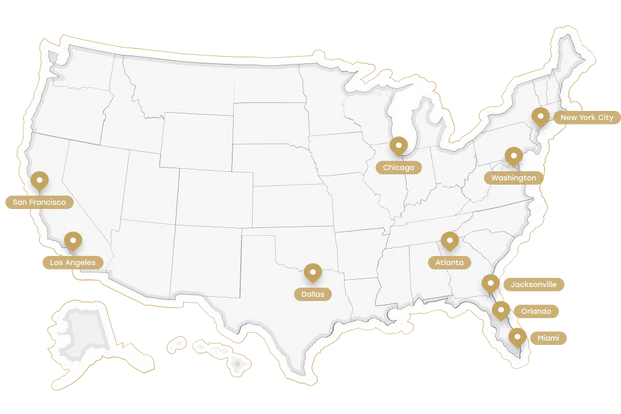
We proudly serve clients across the United States, including major cities such as
· Jacksonville · Orlando · Miami · Atlanta · Dallas · Los Angeles · New York City · Chicago · Washington · San Francisco ·


Our old wood window surrounds were totally rotted out. Called Royal Foam for advice, and the free consult was super helpful. Went with PU foam because they said it would hold up better and capture the original profile details. The match is perfect. Looks exactly like the 1920s originals, but zero maintenance now. So happy!
Patricia Holloway
I'm building a new house and wanted something different than the standard trim. Sent them a sketch of a modern, chunky window surround I saw online. They said no problem and fabricated it in EPS for me. Super lightweight, easy for my crew to install, and after stucco, it looks monolithic. Custom work without the crazy price tag.
David Chen
We have a beach cottage with crazy humidity and salty air. Wood trim just dies here. Royal Foams PU foam window surrounds are a lifesaver. Had a quick consult, they recommended the right density, and we installed them last spring. Still looks brand new. No swelling, no peeling paint. Finally, a permanent solution!
Amanda Foster

Exterior window surrounds are architectural moldings designed to frame window and door openings, conceal construction edges, and improve overall façade performance. In modern construction, EPS (expanded polystyrene) window surrounds are widely used due to their low weight, dimensional stability, and consistent manufacturing quality.
Window surrounds define the boundary between the wall system and the window frame. From an engineering perspective, they serve as a transition element that improves both visual alignment and functional sealing of the opening. EPS window surrounds are factory-produced profiles with protective coatings that ensure resistance to moisture, UV exposure, and mechanical stress.
Unlike traditional stone or cast concrete elements, EPS surrounds do not introduce excessive load on the façade or supporting structure. This makes them suitable for both new construction and retrofit applications where weight and installation speed are critical factors.
These characteristics make EPS window surrounds a controlled and predictable solution compared to traditional site-built alternatives.
EPS allows accurate replication of both simple and complex profiles without increasing installation complexity.
Installation of EPS window surrounds is simplified compared to heavy materials. The process typically includes:
Due to the lightweight nature of EPS, installation does not require heavy equipment. In most cases, window surrounds can be installed within hours, reducing labor costs and project timelines.
EPS window surrounds are designed to perform under varying environmental conditions, including temperature fluctuations, moisture exposure, and UV radiation. Protective coatings prevent degradation while maintaining a stable finish.
Unlike wood, EPS does not absorb moisture or deform. Unlike concrete, it does not crack due to shrinkage or thermal stress. This material stability reduces long-term façade defects.
EPS window surrounds improve cost efficiency across multiple stages of a project:
In many cases, total project cost is lower compared to traditional materials, even when initial product pricing is similar.
EPS window surrounds are suitable for residential, multifamily, and commercial projects. They are commonly used in façade upgrades, new construction, and architectural renovation where consistent quality and predictable installation are required.
The ability to manufacture custom profiles allows adaptation to various architectural styles without compromising performance.
Exterior window surrounds made from EPS provide a technically efficient solution combining low weight, durability, and precision manufacturing. As part of a façade system, they improve both performance and architectural clarity while maintaining predictable installation and lifecycle costs.